All blog posts
Published on
11.08.2020
Why e-learning is also worth it for smaller companies

Norma Demuro
E-Learning Expert, CEO @ keelearning
description

The "Mittelstand" (small and medium-sized enterprises) rules Germany. In 2017, the so-called SMEs (
Free download e-book: Strategic e-learning planning in 10 steps
) made up a good 99 percent of all companies. 57 percent of employees work in SMEs. It is in the nature of things that small and medium-sized enterprises are structured differently than large ones. Investments and decision-making processes differ. This also affects the area of further education and training. For this reason, smaller companies are often wary of making larger investments in modern digital learning formats. However, in this article, you will learn why SMEs can also benefit from e-learning and that it does not have to be expensive.
What is e-learning?
First of all, we would like to describe what we mean by e-learning. Because this term is filled with all sorts of content that differ greatly from one another. In general, e-learning combines all types of electronically supported learning. But electronic? That can mean a lot. By definition, even a PowerPoint presentation or a PDF is e-learning. We don't want to disagree with that, but as an e-learning provider, we know that there is more to it. For us, e-learning is an electronic learning platform that
- on all devices is displayed equally
- appealingly and user-friendly is displayed
- can be filled with a wide variety of learning materials (videos, PDFs, flashcards, web-based training, etc.)
- motivates the learner
- conveys knowledge playfully and
- can fully represent seminars
This no longer has much to do with a PDF, but rather with software that makes completely digital learning possible.
You can find out more about the definition of e-learning here.
E-learning (SME) for small and medium-sized enterprises?
In short: Absolutely! And SMEs have already recognized this. Because all the advantages that e-learning software has for large companies, it also has for smaller ones:
- Learning independent of location and time
- Time and cost savings
- Individualized learning
- Monitoring of success
- Multilingualism
- Better employer image (keyword: shortage of skilled workers)
- Better work performance
- More effective onboarding
- And, and, and.
Optimally utilize personnel resources with e-learning
However, e-learning for small companies is also particularly valuable because every employee counts here! Personnel resources must be utilized optimally. With flexible e-learning software, SMEs offer their employees the optimal tool to keep up to date and to continue their education continuously.
Fast onboarding, effective familiarization
With an LMS, you can not only convey knowledge and supplement or replace further training, but also onboard employees in a time- and cost-effective manner. This is especially important for smaller companies where tasks are often not distributed among many employees. Furthermore, with onboarding via software, you do not have to provide an employee to train the new colleagues.
Nevertheless, smaller companies often lag far behind the possibilities mentioned above.
It is not uncommon for investments to be made with the handbrake on, for fear that the costs could become too high.
Is e-learning software expensive?
Yes and no. We don't want to pretend that good software doesn't cost anything. That would not only be a lie, but also unrealistic. Of course, there are free and very cheap tools that also have their justification. But those who want to implement e-learning in their company in the long term will have a hard time motivating their employees with these learning solutions in the long run.
How can you use a good LMS in smaller companies?
What helps here are modular Learning Management Systems (LMS). Because not only is every employee individual, but every company is as well. It is useful if e-learning software consists of several modules that you can book as needed, or cancel again.
Which e-learning modules are there?
An entry into the e-learning world could consist of introducing a quiz app. Your employees can download the quiz app to their mobile phone, tablet, or computer and play against each other. They can freely choose which questions must be answered. This way, you impart knowledge in a playful and sustainable way. If that shows success, in a next step, you could book additional various learning formats such as flashcards; perhaps an integrated webinar tool will make sense at some point, or you will need e-learning courses that can be retrieved via the e-learning software.

Conclusion: E-learning is not cheap, but if used correctly, it is not expensive either
That may sound a bit cryptic at first, but behind it lies nothing more than a fundamental idea: Of course, good software costs money, but if you use it correctly and pay attention to quality, it will pay off. The diverse digitalization processes demand further training and flexibility. A modern LMS offers you all of this.
Find out here which possibilities the keelearning e-learning software offers you.
[embed]https://www.keelearning.de/wp-content/uploads/2024/04/Produktvideo-komprimiert.mp4[/embed]
Prepare yourself optimally for the introduction of e-learning in your company:
» Download e-book "Data protection in e-learning" + Infographic
»Read our article on how to involve your works council in good time when introducing e-learning + Infographic
Table of Contents
Ready for training that works?
Get to know keelearning in a personal demo – no obligation and tailored to your needs.
Share
Lorem ipsum dolor sit amet, consectetur adipiscing elit. Suspendisse varius enim in eros elementum tristique. Duis cursus, mi quis viverra ornare, eros dolor interdum nulla, ut commodo diam libero vitae erat. Aenean faucibus nibh et justo cursus id rutrum lorem imperdiet. Nunc ut sem vitae risus tristique posuere.
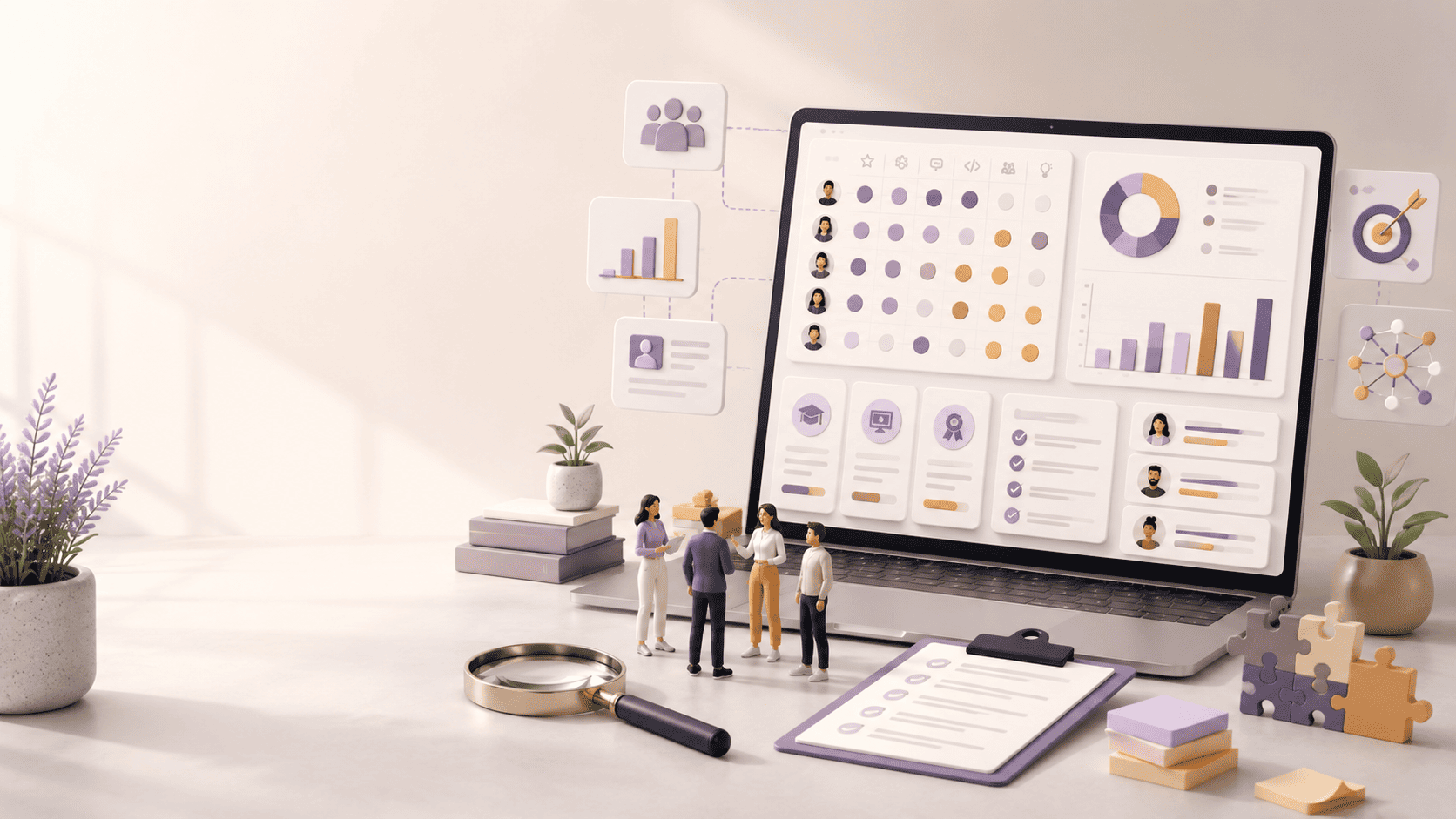




The learning platform for businesses looking to make their training simple, mobile, and accessible to all – with no IT overhead.