All blog posts
Published on
23.11.2026
Dealer training without travel costs: How to train partners and sales staff digitally

Lisa Kubatzki
Senior Content Marketing Manager @ keelearning
description

New product line, new sales arguments, new season: and once again the field sales team drives from dealer to dealer to deliver training. Anyone who knows this routine knows how much time and money goes into it, and how little of it ends up in the actual sales conversation.
The short answer: Digital dealer training replaces the road trip with a partner academy. Each dealer gets its own area, sales staff learn in short units on their smartphones, and you can see for each partner who has been trained. In-person sessions remain for what really has to happen on site.
In our conversations with 32 companies in October 2026, 6 wanted to train not only their own employees but also customers, dealers or partners. The head of sales at one manufacturer summed up the problem: “It is of course incredibly time-consuming if I have to travel to the customer every time, or someone from our field sales team has to.” (Quote translated from German.)
{{key-takeaways}}
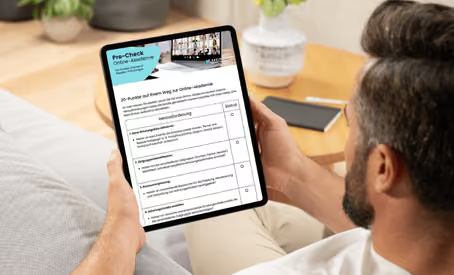
Ready for your online academy?
Why on-site dealer training reaches its limits
In-person training at dealer locations is expensive, reaches only part of the staff and becomes outdated with every product change. Four reasons are typical:
- Travel time instead of selling time. Every appointment ties up the field sales team for the journey there and back, often a full day for a few hours of training.
- Only those present get trained. Shift work, part-time staff and temporary help mean that some of the sales team misses the session.
- Knowledge goes stale quickly. New products, prices or promotions require a new round, and until the next visit, dealers sell with outdated information.
- High turnover in retail. New sales staff join all the time and have to wait for the next visit to be onboarded.
On top of that, after a training day the manufacturer usually doesn't know who attended and what stuck.
What dealers and sales staff really need
Sales staff don't need an e-learning seminar. They need quick answers for their next customer conversation. Good dealer training is therefore:
- Short: learning units of a few minutes that fit between two customers.
- Mobile: on the smartphone, without a company PC and without a lengthy login.
- Practical: product benefits, sales arguments, typical customer questions and objections.
- In their own language: especially for international sales partners.
- Motivating: quiz duels or small competitions between stores keep knowledge fresh.
And it is connected to training your own employees. A manufacturer of safety shoes told us they wanted to “reach the dealers on the one hand, but also, first and foremost, our own employees.” (Quote translated from German.) One system for both audiences saves duplicate work on content.
Partner academy: how digital dealer training is structured
A partner academy is a learning platform where each dealer or partner has its own area. You create content once centrally and roll it out to all partners.
| Building block | What it does |
|---|---|
| Separate area per partner (tenant) | Each dealer only sees its own content and users, optionally with its own admin |
| Branding | Your logo, colors and design, so the academy is recognizable as your offering |
| Central content | Create product training once and roll it out to all partners |
| Mobile app | Sales staff learn on their smartphones, even without a company PC |
| Multilingual content | Content for international partners in their own language |
| Reporting per partner | You see how far each dealer has progressed with training |
The tenant structure was a central topic in our conversations. A training provider for professional drivers described the need as a structure “where the company again has an admin, but only for its own area.” (Quote translated from German.)
In keelearning, you set this up with multi-tenancy: separate learning environments for partners, franchisees or customers, each with its own branding and reporting. For the customer side, read Organizing customer training.
5 steps to digital dealer training
- Define audiences and goals: Which partners, which roles (store management, sales, service), and what should they be able to do after the training?
- Gather content: Collect product documents, presentations and FAQs from the field sales team. Existing PowerPoints and PDFs can be turned into courses with AI.
- Set up the structure: Create an area for each dealer, set up branding and decide who gets admin rights at the partner.
- Start with pilot dealers: Two or three partners test content and access before everyone is invited.
- Roll out and keep going: Deliver new products as short units, offer quiz duels between stores and use per-partner reporting in sales.
Tip: In-person sessions don't have to disappear. If knowledge is delivered digitally beforehand, the on-site appointment can be used for practice and questions.
{{inline-cta}}
How to offset the travel costs
Whether digital dealer training pays off can be shown with a simple calculation using your own numbers:
Cost per year = number of dealers × sessions per dealer × (travel costs + hours × hourly rate)
Be honest about the hours: travel there and back, preparation and follow-up, and the selling day the field sales team loses. Compare this with the license and setup costs of a platform, and ask every provider for the total cost for your number of users over several years. For a fair comparison of several providers, our LMS criteria catalog includes a 3-year cost comparison.
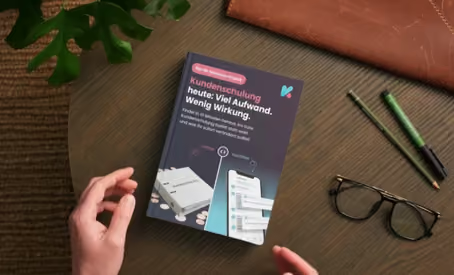
How good is your customer and partner training?
A clear rating and three measures that work right away.
- Assess training processes
- Spot support load
- Check scalability
- 3 levers for more revenue
FAQ: Dealer training
What is dealer training?
Dealer training gives the sales staff of dealers and sales partners knowledge about products, sales arguments and service. The goal is for retail partners to advise on and sell a manufacturer's products competently.
How can I train dealers digitally?
Through a partner academy: a learning platform where each dealer has its own area and sales staff complete short learning units on their smartphones.
Does digital training replace the field sales team?
No. It takes work off their plate. Basics and product knowledge are delivered digitally, and on-site visits are used for hands-on practice, questions and relationship building.
Can each dealer manage its own users?
With a multi-tenant platform, yes. Each partner gets its own area, optionally with its own admin who only sees that partner's users.
Can I use the same content for my own employees and for dealers?
Yes. You create content once centrally and roll it out to internal teams and external partners.
Conclusion: fewer road trips, more sales knowledge
Digital dealer training doesn't just save travel costs. It reaches the entire sales team, keeps product knowledge up to date and shows you, for each partner, where retraining is needed.
Would you like to see what a partner academy looks like with keelearning? We'll show you in a personal demo, with no obligation.
Key Takeaways
- Digital dealer training replaces the field sales team's road trip with a partner academy.
- Each dealer gets its own area, optionally with its own admin, branding and reporting.
- Sales staff learn in short units on their smartphones, even without a company PC.
- Content is created once centrally and rolled out to your own teams and partners.
- In-person sessions remain for practice and questions, while the basics are delivered digitally.
Table of Contents
Ready for training that works?
Get to know keelearning in a personal demo – no obligation and tailored to your needs.
Share




The learning platform for businesses looking to make their training simple, mobile, and accessible to all – with no IT overhead.