All blog posts
Published on
Knowledge Management in Industry: Methods, Challenges, and Tools

Lisa Kubatzki
Senior Content Marketing Manager @ keelearning
description

In industrial companies, knowledge is created in many places simultaneously: in production, maintenance, quality management, development, service, sales, and among experienced specialists who solve problems every day. This very knowledge determines how stable processes run, how quickly new employees are onboarded, and how safely operational teams work.
The challenge: A large portion of this knowledge is not properly documented. It is locked away in people's heads, shift handovers, old folder structures, PDFs, emails, or isolated teams. When an experienced person leaves the company, more is often lost than just a worker. Valuable experience, shortcuts, lessons learned from mistakes, and context that was barely visible to others disappear.
In this article, you will learn what knowledge management means in the industrial sector, which types of knowledge are particularly important, which methods work, and which tools support industrial companies in digital knowledge management.
TL;DR: Industrial Knowledge Management
- Knowledge management in the industrial sector helps to systematically secure experiential knowledge, process knowledge, safety knowledge, machine knowledge, and quality standards.
- Particularly challenging aspects include shift work, international teams, the shortage of skilled workers, knowledge siloed in individual heads, and employees without a fixed desk.
- Proven methods include mentoring, digital knowledge bases, microlearning, lessons learned, communities of practice, and structured onboarding processes.
- For digital knowledge management, industrial companies need more than just a file storage system: content must be searchable, understandable, multilingual, mobile-accessible, and regularly updated.
- The tool comparison covers keelearning, Confluence, orgavision, Microsoft SharePoint and amberSearch introduced.
- keelearning is particularly well-suited for combining knowledge management with training, communication, multilingual support, mobile accessibility, and analytics.
Request a keelearning demo now
What is industrial knowledge management?
Industrial knowledge management encompasses all the measures companies use to capture, structure, share, and develop knowledge. The goal is to ensure that relevant knowledge is not left to chance, but is made accessible to the right employees.
This includes, for example:
- technical documentation
- work and operating instructions
- process descriptions
- safety training
- quality standards
- machine and equipment knowledge
- practical experience from malfunctions and projects
- training materials
- product and service knowledge
- best practices from teams and locations
Unlike knowledge management in office-based organizations, the industrial sector has unique requirements. Knowledge must not only be stored; it must be functional in everyday work—on the production floor, in the warehouse, in maintenance, at machines, in labs, or in the field. You can find more basics on this topic in the article Knowledge management in companies.
Why is knowledge management so challenging for industrial companies?
Industrial companies are complex. People, machines, shifts, locations, standards, safety regulations, and supply chains are all interconnected. As a result, knowledge gaps often emerge at these interfaces.
Knowledge is often held by individuals
Experienced employees often know which machine is sensitive, which error patterns occur regularly, or which customers have specific requirements. This knowledge is valuable but difficult to capture. As long as it is not documented or shared, the company remains dependent on individual people.
Shift work hinders communication
In many industrial operations, teams work on staggered schedules. Information from one shift does not always reach other shifts in its entirety. When solutions, malfunctions, or quality deviations are only passed on verbally, inconsistent levels of knowledge quickly arise.
The skilled labor shortage makes knowledge transfer more urgent
When new employees need to become productive faster, clear learning paths, understandable content, and quick access to knowledge are essential. If a structure is missing, onboarding takes longer, and experienced specialists are constantly burdened by questions.
Language barriers increase risks
Industrial companies often work with international teams. Especially when it comes to safety information, work instructions, and quality standards, there can be no uncertainty. Automatic translation can help make core content available in multiple languages more quickly.
Compliance requires documentation
Occupational safety, DGUV-relevant training, ISO requirements, hygiene, quality management, and compliance topics must not only be explained but often documented as well. Online safety training helps companies organize mandatory training sessions in a digital and traceable manner.
What types of knowledge are important in the industry?
Knowledge management becomes more tangible when you distinguish between different types of knowledge. Not every type of knowledge requires the same method or tool.
Process knowledge
Process knowledge describes how company operations function. This includes production processes, approvals, inspections, escalation paths, handovers, or maintenance cycles.
This knowledge is particularly important because small deviations can have major consequences: delays, scrap, rework, or safety risks.
Safety knowledge
Safety knowledge covers training, hazards, emergency procedures, personal protective equipment, machine clearances, and conduct during malfunctions. It should be repeated regularly and documented in a verifiable manner.
Machine and equipment knowledge
Machine knowledge is often born from experience. Manuals explain standard processes, but not always typical noises, recurring fault patterns, or practical tips gained from years of work.
That is why industrial companies should systematically capture experiential knowledge from maintenance, production, and quality assurance.
Quality knowledge
Quality standards must not only be defined but also understood. Employees should know how to identify deviations, how to perform inspections, and when to trigger a report.
Experiential knowledge
Experiential knowledge is difficult to replace. It is built through observation, problem-solving, and repetition. Examples include typical sources of error, proven best practices, troubleshooting shortcuts, or tips for rare special cases.
Methods for knowledge management in industry
Knowledge management works best when it is integrated into everyday work. The following methods are particularly suitable for industrial companies.
1. Create knowledge maps
A knowledge map shows what knowledge exists in the company and where it is located. It helps to identify critical knowledge gaps.
For example, ask yourself:
- Which tasks can currently only be performed by a few people?
- Which machines are heavily dependent on individual experts?
- Where do questions arise on a regular basis?
- Which content is outdated or difficult to find?
- What knowledge would be critical if an employee were to leave the company?
2. Use mentoring in a structured way
Mentoring is particularly effective when experienced employees not only pass on their knowledge verbally but also document it at the same time. New employees benefit from personal guidance, while the company secures important content for the long term.
Helpful tools include:
- Checklists
- Short videos
- Learning paths
- Guiding questions
- Debriefing sessions
- Documentation of common mistakes
3. Implement microlearning
Short learning units fit better into the daily industrial routine than long training blocks. Microlearning is suitable for safety rules, process updates, machine instructions, product knowledge, or quality standards.
For operational teams, it is particularly important that content is mobile-friendly and easy to understand. You can find more on this under Mobile learning.
4. Document lessons learned
After disruptions, audits, production launches, or customer projects, insights should not be lost. A simple lessons-learned format is often sufficient:
1. What happened?
2. Why did it happen?
3. What solution was found?
4. What should other teams learn from this?
This is how individual experiences turn into reusable knowledge.
5. Building Communities of Practice
Specialist groups or digital communities help share knowledge across locations and departments. Employees can ask questions, share solutions, and make best practices visible. With communication and community features, this exchange can be organized in a more structured way.
6. Translating knowledge into training
Not every document is understood automatically. That is why important content should be converted into training sessions: with short explanations, examples, knowledge checks, and reviews.
For recurring topics, ready-made courses for industrial companies are a great starting point.
Introducing digital knowledge management: step by step
Software alone does not solve a knowledge problem. A clear process is the deciding factor.
Step 1: Make knowledge visible
Start with an inventory. Where does knowledge currently reside? In folders, emails, PDFs, shift logs, wikis, ticketing systems, or with individual experts?
First, identify the topics that have the greatest impact on safety, quality, productivity, or onboarding.
Step 2: Define target groups
Not all employees need the same content. A production team requires different information than maintenance, HR, service, or quality management.
Therefore, organize knowledge by roles, locations, languages, and tasks.
Step 3: Prioritize content
Don't start with all your documents at once. Begin with knowledge that is frequently used or carries high risk:
- Safety training
- Machine operation
- Quality inspections
- Onboarding
- Process changes
- Maintenance procedures
- Common sources of error
Step 4: Choose a platform
Determine whether your primary goal is managing documents, searching for knowledge, training employees, or fostering collaboration. This will help you decide which software is the right fit.
For industrial companies, the following are particularly important:
- Mobile access
- Easy search
- Role and location-based access control
- Multilingual support
- Media library and news
- Learning paths
- Reporting
- Communication features
- Proof of mandatory training
Step 5: Launch a pilot
Start with one department, role, or location. This allows you to see early on whether content is easy to understand, whether employees are using the platform, and where adjustments are needed.
Step 6: Measure usage and maintain content
Knowledge management is not a one-time project. Content must be kept up to date. At the same time, you should check which topics are being used and where knowledge gaps exist.
Possible metrics include:
- completed training sessions
- outstanding mandatory training
- frequently searched content
- inquiries from teams
- feedback on content
- test results
- usage of media library and news
Comparison of knowledge management tools for industrial companies
The following overview shows different tool approaches. It does not replace an individual vendor assessment, but it helps with initial orientation.
Disclaimer: This research for this comparison was conducted in July 2026. We strive to keep all information as current as possible and update it regularly. However, if you would like to familiarize yourself with our competitors' offerings, you should view them via their official website or contact a representative.
keelearning for knowledge management in the industry
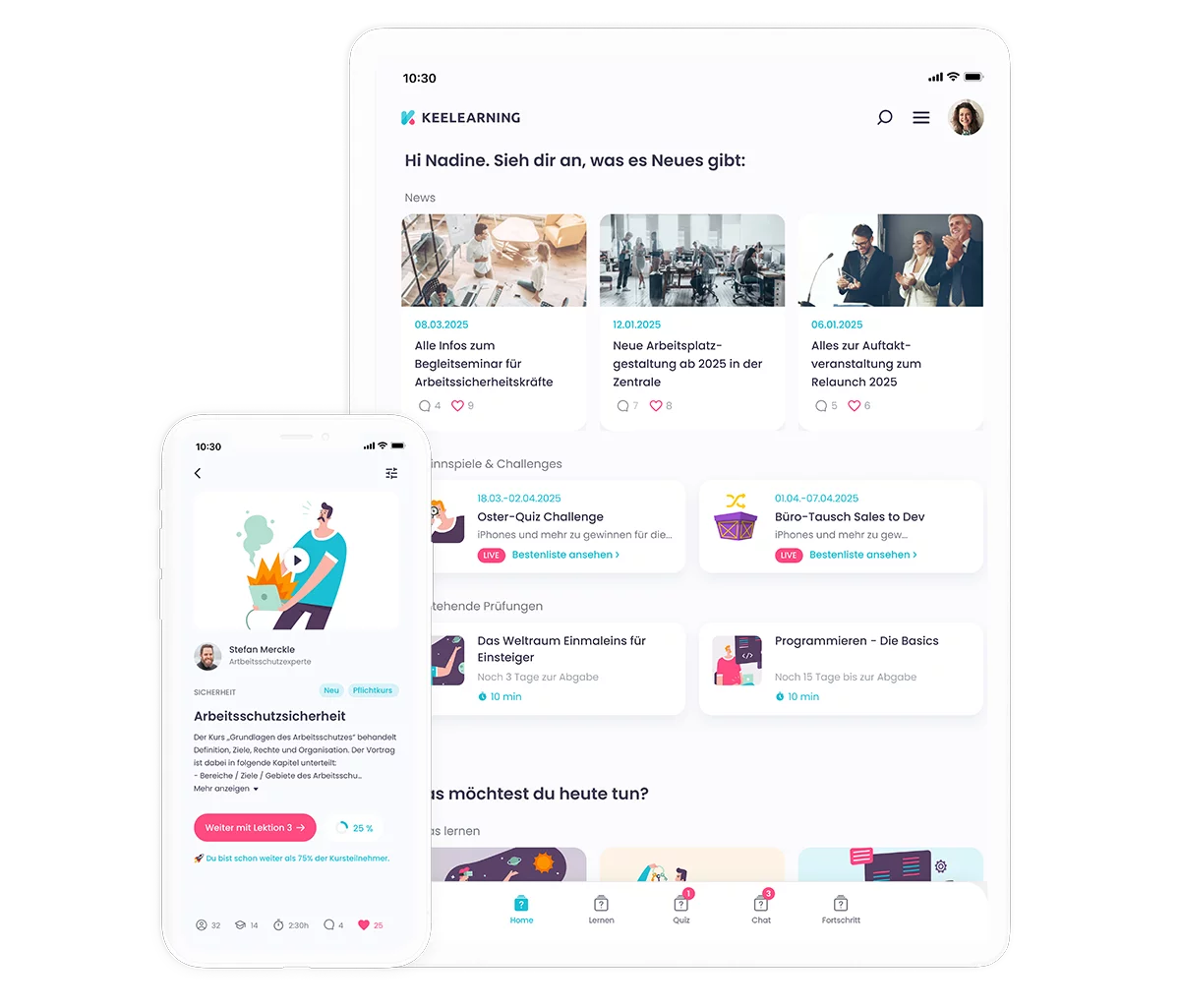
keelearning is particularly suitable for industrial companies that want to not only store knowledge but also actively share it. The platform combines knowledge management with training, communication, and evaluation.
Particularly relevant are:
- knowledge community and chat to share experiential knowledge between teams and locations
- Media Library & News as a central repository for documents, operating instructions, and manuals
- automatic translation for international teams
- ready-made courses for industrial companies, such as for occupational safety or machine training
- Mobile-first access for employees without a desktop workstation
- Statistics and analytics to identify knowledge gaps and training needs
- digital training and certification via Online safety training
This creates a learning and knowledge space that is not just intended for HR or L&D, but directly reaches operational teams.
discover keelearning for industrial companies
Knowledge management is becoming a core industrial task
Industrial companies can no longer manage knowledge on the side. Skilled labor shortages, complex machinery, international teams, safety requirements, and increasing competitive pressure make structured knowledge transfer a central priority.
Making knowledge visible reduces dependency on individuals. Keeping content mobile and multilingual ensures it reaches operational teams as well. Combining training, certification, community, and analytics makes knowledge management manageable.
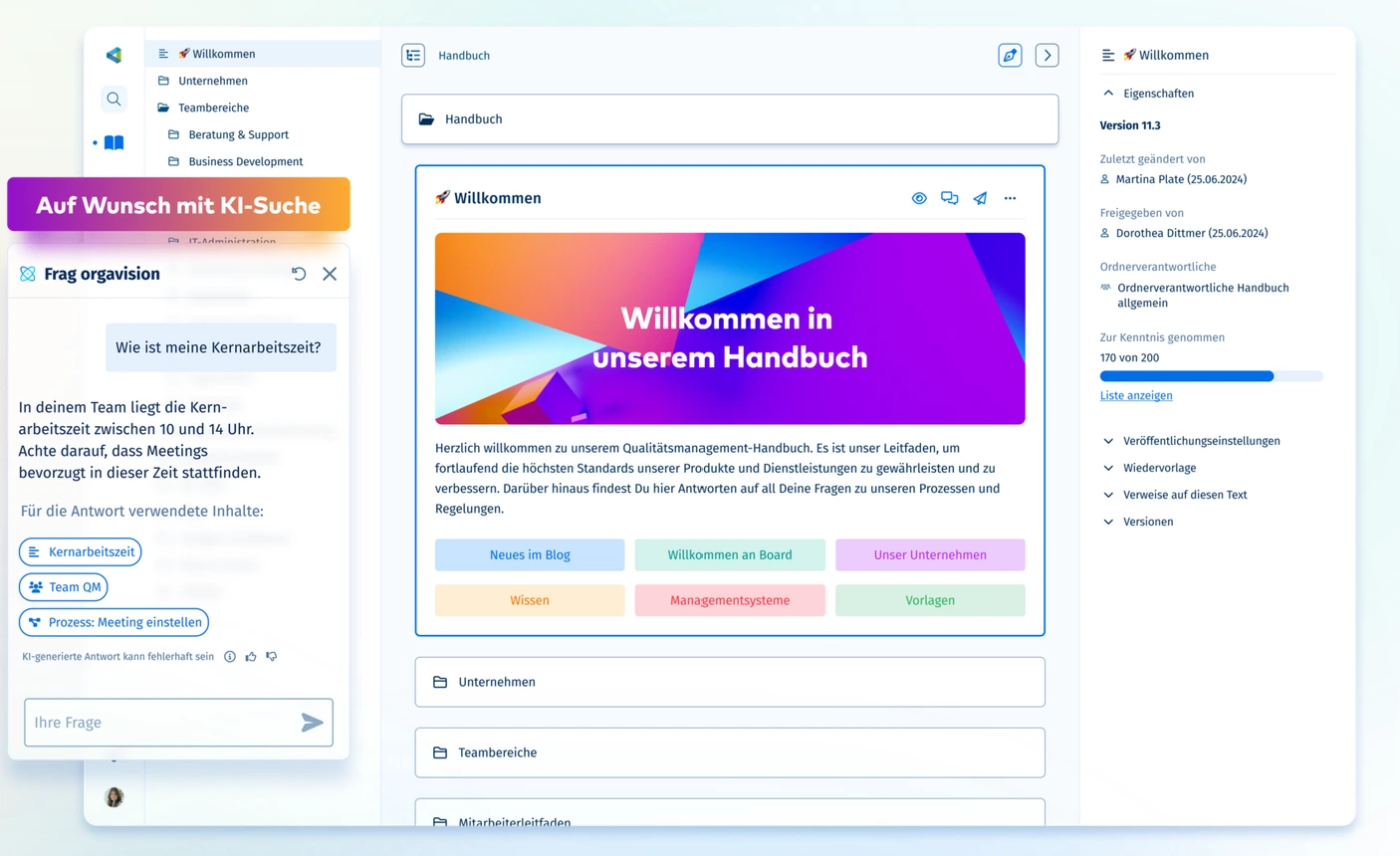
In the coming years, AI-supported knowledge management will become even more important. Search functions, automatic translations, intelligent recommendations, and data-based training analytics can help make knowledge usable faster. However, the decisive factor remains that content must be understandable, up-to-date, and integrable into everyday work.
With keelearning, industrial companies can bundle knowledge, training, communication, multilingualism, and reporting into a single platform. This creates digital knowledge management that does more than just document—it actively empowers employees.
Schedule a free online demo
FAQ: Industrial Knowledge Management
What is knowledge management in the industry and why is it important?
Industrial knowledge management involves the systematic capture, structuring, and sharing of technical, organizational, and practical knowledge. It is essential because knowledge directly impacts safety, quality, productivity, and onboarding.
How can I prevent knowledge loss when employees leave the company?
Identify critical knowledge early, build knowledge maps, document lessons learned, utilize mentoring, and make experiential knowledge accessible via digital platforms.
Which software is suitable for knowledge management in manufacturing companies?
Depending on your goals, LMS platforms, wiki systems, quality management software, document management solutions, or AI-powered search systems are suitable. If knowledge needs to be taught, verified, and documented, an LMS with knowledge management features is particularly effective.
How do I involve employees without desktop access in knowledge management?
Use mobile apps, bite-sized learning content, QR codes, tablets, multilingual content, and clear role-based access. It is crucial that knowledge is available exactly where employees actually need it. keelearning is particularly well-suited for this.
Which standards and regulations are relevant for knowledge management in industrial companies?
Depending on the industry, ISO 9001 requirements, occupational health and safety, DGUV-relevant training, compliance guidelines, data protection, and internal quality standards may be relevant. It is important that companies not only provide content but also document training and certifications in a traceable manner.
Table of Contents
Ready for training that works?
Get to know keelearning in a personal demo – no obligation and tailored to your needs.
Share
Lorem ipsum dolor sit amet, consectetur adipiscing elit. Suspendisse varius enim in eros elementum tristique. Duis cursus, mi quis viverra ornare, eros dolor interdum nulla, ut commodo diam libero vitae erat. Aenean faucibus nibh et justo cursus id rutrum lorem imperdiet. Nunc ut sem vitae risus tristique posuere.





The learning platform for businesses looking to make their training simple, mobile, and accessible to all – with no IT overhead.