All blog posts
Published on
Hospitality Employee Training: Tips, Courses, and Software for Strong Teams

Lisa Kubatzki
Senior Content Marketing Manager @ keelearning
description

In the hospitality industry, quality isn't solely determined by the menu. It's also crucial whether employees understand how hygiene, service, safety, POS systems, guest communication, and internal processes work.
Especially during ongoing operations, there's little time for this. New team members often start at short notice. Shifts change. Teams work in multiple languages. Yet, standards must be met every day.
In short: Employee training in gastronomy requires clear content, simple processes, and formats that fit daily work routines.
In this article, you will learn which training courses are particularly important for hospitality businesses, how to systematically plan mandatory instructions and voluntary further training, and what matters for audit-proof documentation. You will also get a concise overview of suitable training software for restaurants, system gastronomy, and franchise operations.
Too Long, Didn’t Read: Employee Training in Gastronomy
• Employee training in gastronomy includes mandatory instructions, hygiene, HACCP, infection control, occupational safety, allergens, service, product knowledge, POS systems, and internal processes.
• Short, mobile, and multilingual learning formats are particularly important because hospitality teams often work in shifts and without a fixed PC workstation.
• A training matrix provides structure for roles, courses, deadlines, repetitions, and documentation.
• Audit-proof mandatory instructions require documented content, participation, completion dates, test results, reminders, and exportable reports.
• The software comparison features keelearning, TalentLMS, iSpring LMS, 360Learning, and MoodleCloud. For system gastronomy and franchise operations, a digital learning platform is particularly useful when training standards need to be created centrally and rolled out across multiple locations.
Book a demo now and digitize employee training in gastronomy
Why Employee Training is So Important in Gastronomy
Hospitality businesses operate at a high pace. Service, kitchen, bar, POS, inventory, and management are all interconnected. If a process isn't smooth, it immediately leads to queries, delays, or errors. Consequently, training isn't an extra topic for quieter weeks; it's an integral part of operational quality assurance.
Well-structured training ensures that employees understand hygiene and safety standards, competently inform guests, correctly use POS systems, and quickly implement new products or promotions. Especially with high staff turnover, multiple locations, or international teams, training becomes a leadership responsibility.
Further fundamentals on digital learning formats in this area can be found in the article E-Learning in Gastronomy.
What training must employees in gastronomy complete?
The specific training required depends on the business, activity, risk assessment, location, and internal standards. Therefore, always check legal and regional requirements with the relevant authorities.
Infection Control and Food Hygiene
Individuals who work commercially with certain foods require instruction under the Infection Protection Act before starting work. Subsequently, follow-up instructions should be firmly integrated into the operational training process and documented.
Food hygiene and HACCP are also among the most important training topics. Employees should know how food is safely stored, processed, served, and documented.
Typical topics include:
• personal hygiene
• hand hygiene
• cleaning and disinfection
• cold chains and temperature control
• food storage
• prevention of cross-contamination
• self-monitoring and HACCP basics
Allergens and Guest Information
Allergen knowledge is particularly important for service, cashiers, kitchen, and bar staff. Guests rely on information being correct or uncertainties being professionally clarified.
Good allergen training therefore not only shows which allergens are relevant. It also explains where information is located within the business, who answers questions, and how employees should respond safely when interacting with guests.
Workplace Safety and Safety Briefing
Slippery floors, hot surfaces, knives, cleaning agents, electrical equipment, and heavy boxes are part of everyday catering life. Therefore, occupational safety training should be as job-specific as possible.
Relevant topics include safe working practices in the kitchen, service, bar, and storage, handling of work equipment, fire protection, first aid, accident reporting, and emergency procedures.
Digital instructions are particularly suitable when content needs to be regularly repeated and evidence centrally documented. You can find more information on the page Online Safety Briefing.
Service, product knowledge, and internal processes
Not every important training is mandatory. Service quality is built on repeatable knowledge and shared standards.
These include greetings, complaint management, product explanations, upselling, POS, reservations, shift handovers, and new promotions. If these topics are only communicated verbally, varying levels of knowledge quickly emerge.
Relevant information on digital product knowledge transfer can be found on the page Product and Sales Training.
What's important for employee training in hospitality?
Hospitality employee training only works if it fits into daily operations. A concept designed for office teams can rarely be directly applied to the kitchen, service, or bar.
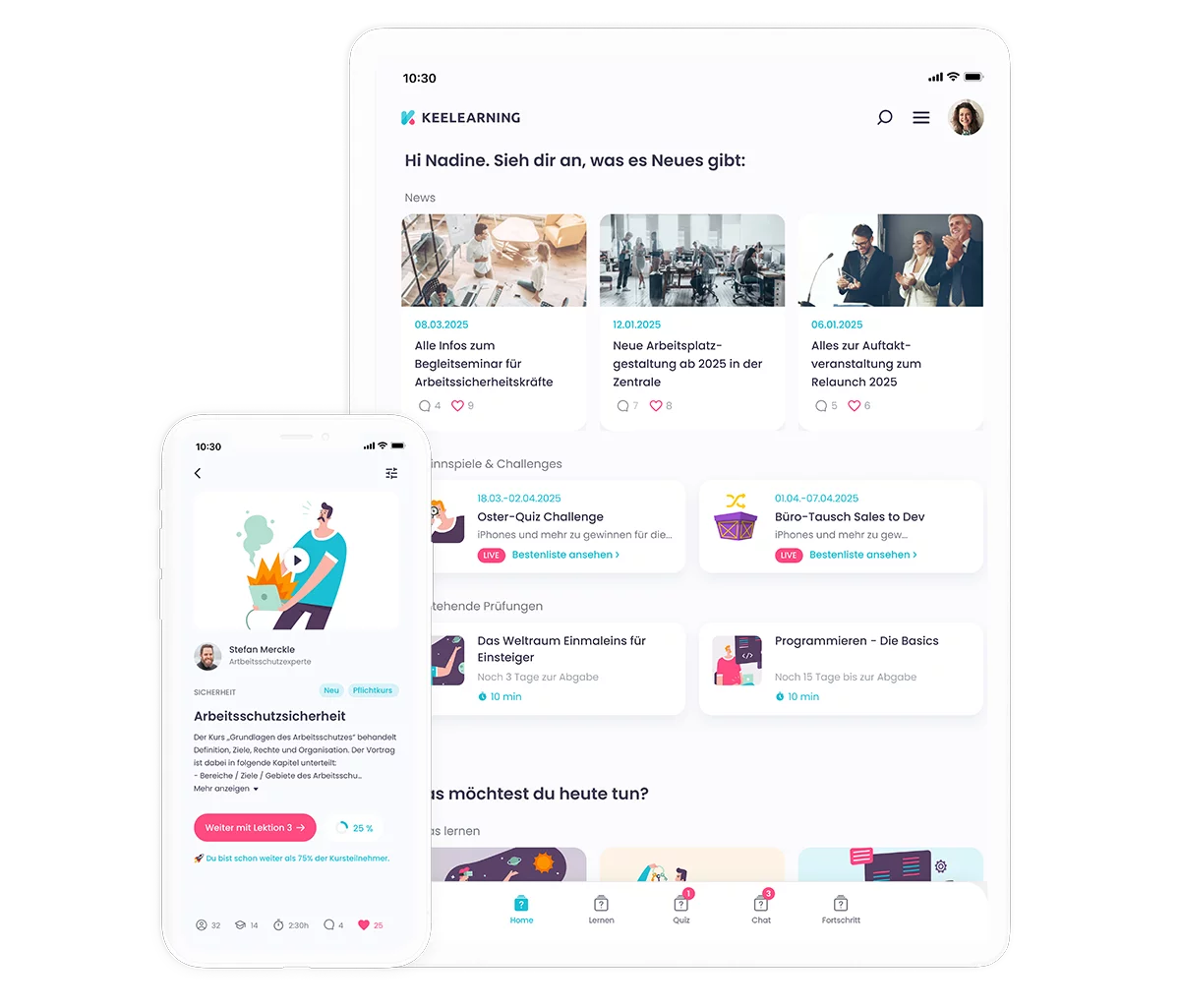
Training should be available on mobile devices
Hospitality staff often don't have a fixed PC workstation. Therefore, training should work on smartphones: quickly accessible, clearly structured, and usable in short timeframes.
This particularly applies to onboarding, hygiene modules, safety instructions, product updates, service standards, and knowledge checks. You can find more on this topic on the keelearning feature page Mobile Learning.
Content must remain short and to the point
Long PDFs are rarely used in daily hospitality operations. Short units with a clear objective are better.
Instead of one long hygiene training, individual modules are created, such as "Washing hands correctly," "Checking the cold chain," "Answering allergen questions," or "Documenting cleaning at shift end." This allows content to be specifically repeated and more easily reviewed.
Multilingualism lowers barriers
Hospitality teams are often international. Therefore, training on hygiene, safety, allergens, and emergencies should be linguistically understandable.
Multilingual content reduces misunderstandings and increases engagement. Automatic translation helps businesses provide core content faster in multiple languages. Learn more here: Automatic Translation for Multilingual Training.
How do I systematize training in the hospitality industry?
The most important step is to stop treating training as isolated events. Instead, you need a system that connects roles, topics, deadlines, and proof of completion.
1. Create a Training Matrix
Define which role requires which training.
This quickly shows you which topics apply to everyone and which content is relevant only for specific roles.
2. Separate Mandatory Training and Development Topics
Mandatory training requires deadlines, repetitions, and proof of completion. Development topics require learning paths, practical examples, and feedback.
This separation simplifies planning. Hygiene, infection control, and safety are mandatory. Service, product knowledge, and communication can be offered additionally based on role, location, or season. For strategic development, it's worth looking at digital employee training.
3. Structure Onboarding as a Learning Path
A good onboarding learning path answers new employees' most important questions before they get overwhelmed by day-to-day operations. Typical content includes location information, dress code and appearance, basic hygiene, POS systems, service procedures, shift handover, emergencies, and short knowledge tests.
With a digital Onboarding App such content can be structured once and then reused for new team members.
4. Centrally Collect and Evaluate Content
Training knowledge is often spread across folders, printouts, chats, emails, and individual site management. A central knowledge structure prevents important information from getting lost.
A digital course library and templates helps to provide standard topics more quickly. With analytics and reporting , those responsible also see which trainings have been completed and where documentation is missing.
How to achieve audit-proof mandatory training in the catering industry?
In practice, audit-proof means: you can verifiably demonstrate who completed which training when, and what content was covered.
Ensure the following:
• clear training titles
• version and update date of the content
• target groups and deadlines
• confirmation of participation
• completion date
• test result or knowledge check
• reminders for outstanding trainings
• central storage of all records
• export option for audits
Especially in branch operations, franchise systems, and chain restaurants, a digital solution significantly reduces administrative effort. Those responsible see which locations are on track and where documentation is missing.
Organize online safety training digitally with keelearning
Which training software is suitable for hospitality businesses?
The right software depends on which problem you want to solve first. A single restaurant often needs a different solution than a franchise system with many locations.
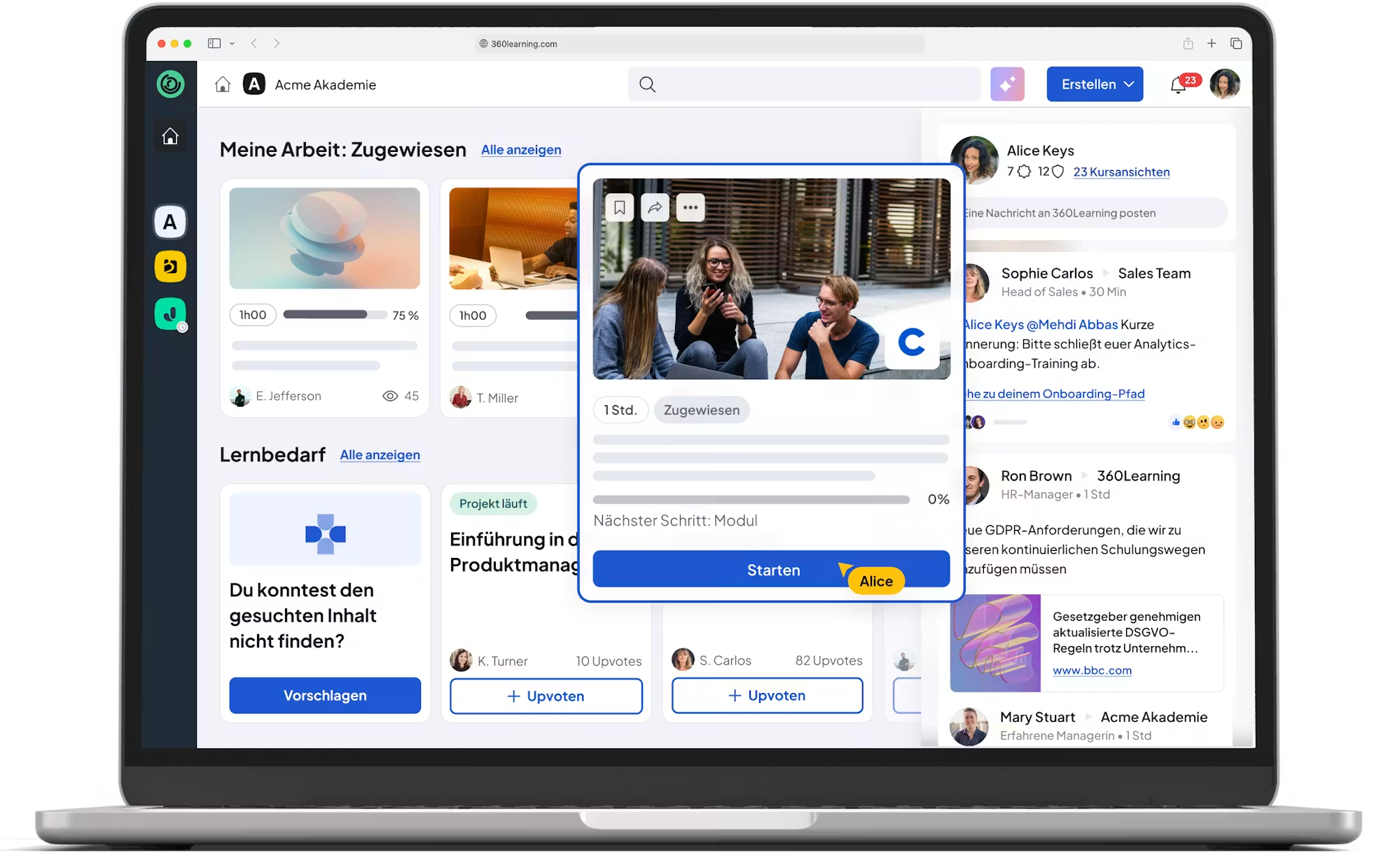
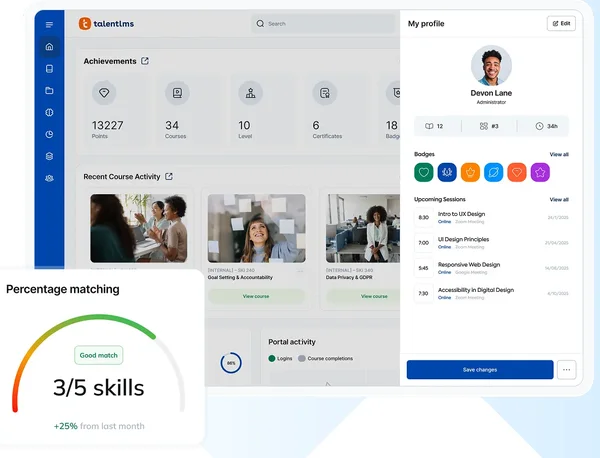
Disclaimer: This comparison is from June 2026. We strive to keep all information as up-to-date as possible and update it regularly. However, if you wish to familiarize yourself with our competitors' offerings, you should consult their official website or contact a representative.
For further guidance on budgets and cost factors, you can find more in the article E-Learning Costs.
Why keelearning is relevant for chain restaurants and franchises
keelearning is particularly suitable for hospitality businesses that want to organize employee training across multiple locations.
Especially in chain restaurants and franchise structures, standards must be centrally defined and locally implemented. New products, promotional weeks, hygiene regulations, service processes, or safety instructions should reach all relevant teams, regardless of location, language, or shift.
To achieve this, keelearning combines mobile training, digital onboarding journeys, mandatory instructions with proof of completion, multilingual content, a course library, quizzes, reporting, internal communication, and central news.
This creates a digital training space where content is not just stored, but actively taught, tested, and evaluated.
Book a keelearning demo for hospitality training
Employee training makes hospitality more predictable
Good employee training not only ensures that rules are followed. It also makes daily operations more predictable.
New employees find their bearings faster. Managers don't have to constantly repeat basics. Guests experience more consistent service quality. At the same time, hygiene, safety, and standards remain demonstrably documented.
Especially for growing hospitality businesses, chain restaurants, and franchises, training thus becomes a real management tool. Knowledge is no longer created randomly during individual shifts, but is centrally built, mobile-delivered, and measurably embedded.
With keelearning, you bundle employee training, onboarding, mandatory instruction, multilingualism, communication, and reporting into one platform. This allows you to reach operational teams without a fixed PC workstation and create a training structure that grows with your business.
Book a keelearning demo now and digitize employee training in hospitality
FAQ: Employee Training in Hospitality
What training is mandatory in the hospitality industry?
Typical mandatory and basic training covers infection control, food hygiene, HACCP, allergens, occupational safety, and safety-related topics. The specific training required depends on the activity, operation, risk assessment, and applicable regulations.
What's the best way to train employees in the hospitality industry?
Short, practical, and mobile learning formats work particularly well. Combine digital basics with practical application in the workplace. This way, employees not only learn rules but also apply them directly in their daily work.
What training measures are available in the hospitality industry?
Suitable options include onboarding learning paths, hygiene training, safety briefings, service training, product training, POS system training, microlearning, quizzes, checklists, role-playing, and regular refreshers.
What software is suitable for employee training in the hospitality industry?
For simple online training, general LMS solutions are sufficient. For system catering, franchise operations, and multi-location businesses, a platform like keelearning makes sense because it brings together mobile training, multilingualism, documentation, reporting, and centralized content. You can get a first impression via the keelearning Online Demo.
Can mandatory training be conducted digitally and in an audit-proof manner?
Yes, digital mandatory training can be organized in an audit-proof manner if content, versions, target groups, deadlines, participation, completions, and test results are documented transparently. It is also important that records are centrally accessible and exportable.
Table of Contents
Ready for training that works?
Get to know keelearning in a personal demo – no obligation and tailored to your needs.
Share
Lorem ipsum dolor sit amet, consectetur adipiscing elit. Suspendisse varius enim in eros elementum tristique. Duis cursus, mi quis viverra ornare, eros dolor interdum nulla, ut commodo diam libero vitae erat. Aenean faucibus nibh et justo cursus id rutrum lorem imperdiet. Nunc ut sem vitae risus tristique posuere.





The learning platform for businesses looking to make their training simple, mobile, and accessible to all – with no IT overhead.