All blog posts
Published on
keelearning vs. elephant

Lisa Kubatzki
Senior Content Marketing Manager @ keelearning
description

keelearning vs. Elephant: Which LMS is right for your company?
Disclaimer: This comparison is current as of 09/17/2026. We strive to keep all information as up-to-date as possible and update it regularly. However, if you would like to familiarize yourself with our competitors' offerings, you should view them via their official websites or contact a representative.
keelearning and Elephant often end up on the same shortlist when companies are looking for a learning management system for deskless employees. At first glance, both providers seem similar: German origins, a mobile-first focus, and a target audience outside the traditional office environment. Upon closer inspection, however, the two platforms differ significantly—in the industries they were built for and in how new course content is created.
This article outlines the differences between keelearning and Elephant regarding feature sets, pricing, and the scenarios in which each platform excels. This comparison is based exclusively on publicly available information from both providers.
{{key-takeaways}}
keelearning and Elephant at a glance
keelearning is designed for companies across all industries with frontline and deskless teams—such as those in retail, hospitality, manufacturing, or healthcare. Employees can access their courses directly via the app without needing a laptop or a company email address, currently in over 20 automatically translated languages. Beyond internal employee training, keelearning can also be used for customer training to centrally onboard external customers or sales partners on products and processes. Gamified elements like quiz battles and the knowledge community round off the offering for peer-to-peer exchange.
Elephant takes a different approach: the platform is tailored to operational teams in industry, construction, and skilled trades, such as installers, technicians, and field staff. At its core is the AI-powered conversion of existing documents—PDFs, work instructions, presentations—into interactive training formats, complemented by a chat-based knowledge assistant that answers employee questions directly based on stored company knowledge. According to the company, Elephant currently works with about a dozen companies in the DACH region; publicly mentioned clients include DEKRA, Enpal, Würth, and Wanzl.
The following overview shows how this different focus affects the feature set in detail.
Feature comparison
The following table compares the most important functional areas of both platforms:
Two philosophies for AI-powered course creation
keelearning and Elephant approach content creation in fundamentally different ways. With keelearning, the AI course assistant provides pedagogical guidance step-by-step through the structure of a new course and generates content based on your input—designed for teams that want to purposefully design new courses from scratch. You also have the option to use PDFs and other files as input for the AI to create new courses. Elephant's AI Course Builder, on the other hand, starts with your existing document library: PDFs, work instructions, or presentations are automatically translated into interactive training formats, which, according to the provider, significantly reduces creation time.
The Keelearning team placed special emphasis on ensuring that the AI course assistant is built on a sound pedagogical foundation. This ensures that the AI-generated results meet high quality standards, saving you significant time on post-production and editing.
Querying company knowledge: available today or still in development?
Elephant currently has the edge in one area: its AI knowledge assistant allows employees to ask questions in a chat, which are then answered based on internal company knowledge—in over 105 languages. A comparable feature at Keelearning—an AI-powered knowledge management system that allows employees and admins to ask questions—is currently in development and will be generally available very soon (as of September 2026). For peer-to-peer knowledge sharing, Keelearning already offers the Knowledge Community, which is both community- and AI-driven: questions are answered either by colleagues or automatically from a knowledge database.
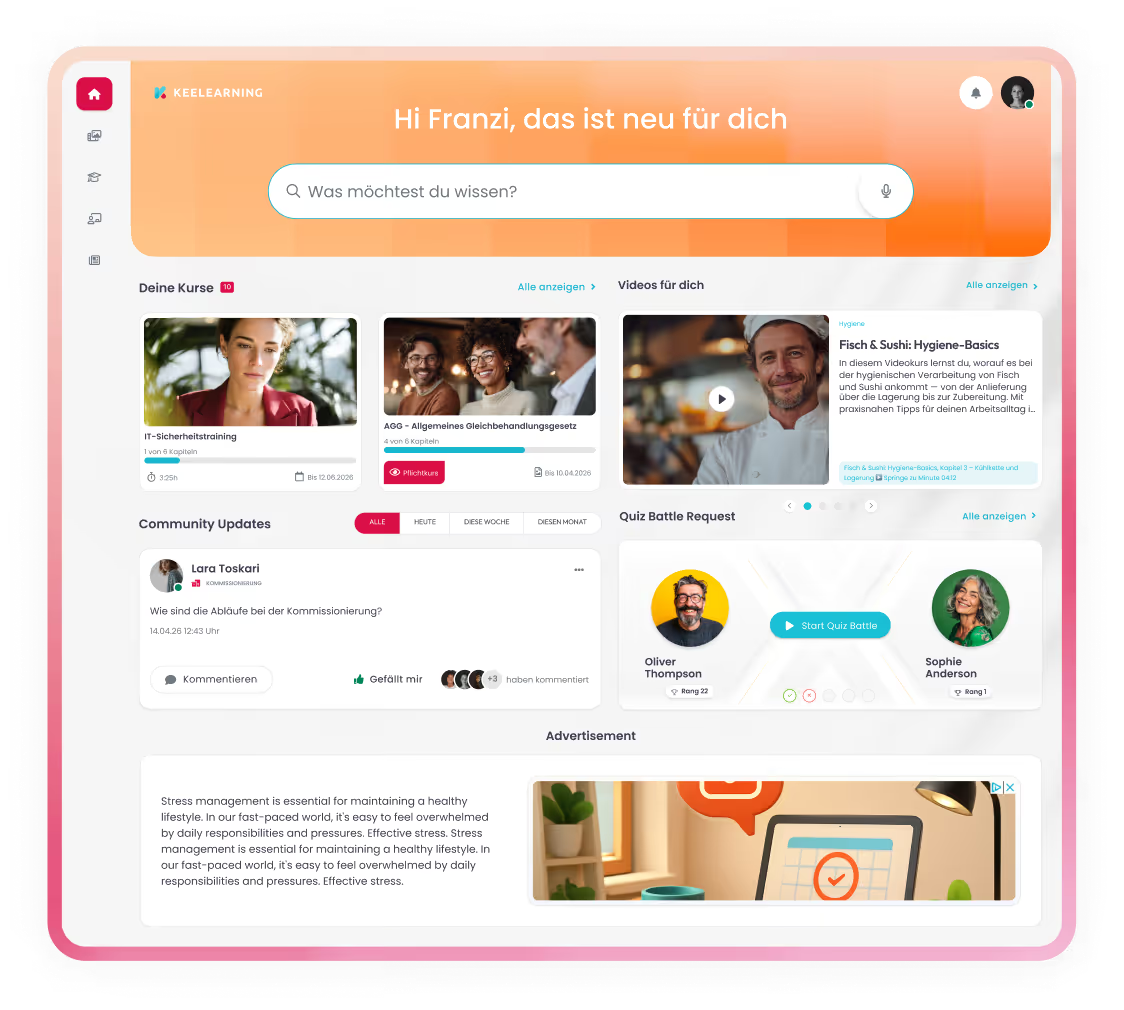
Gamified learning and team knowledge sharing
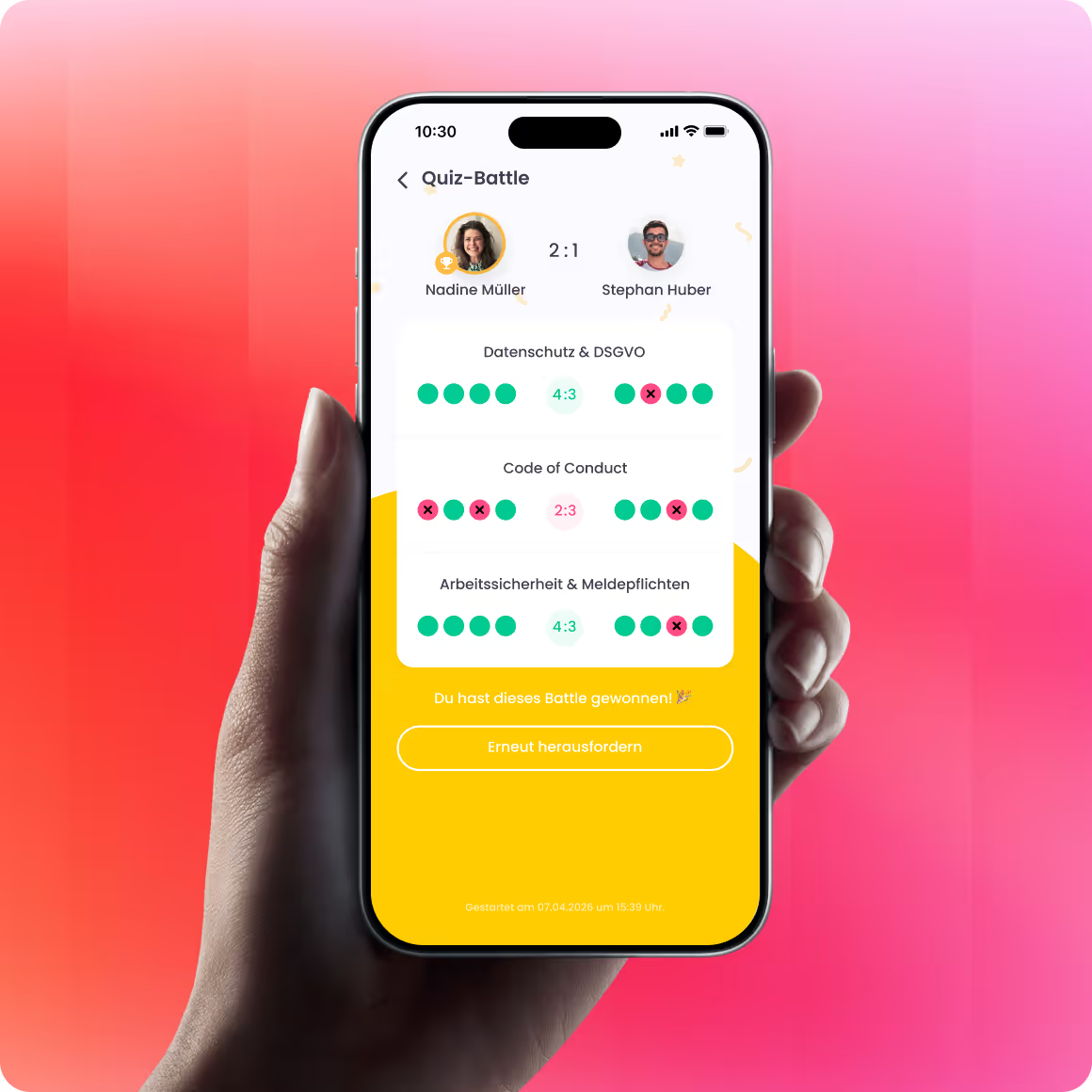
To keep motivation high throughout the course, Keelearning uses gamification elements such as quiz battles, badges, and leaderboards. Additionally, employees can use the Knowledge Community to ask questions about course content, leave comments, and interact directly with colleagues instead of searching for answers on their own. While Elephant’s product description mentions short, gamified lesson formats, it does not mention a comparable peer-to-peer exchange function. If peer-to-peer knowledge sharing is a priority for you, Keelearning offers a dedicated solution.
Certifications, data protection, and hosting
Both providers are closely matched when it comes to security and compliance: Keelearning and Elephant are both ISO/IEC 27001 certified, GDPR-compliant, and host data on servers in Germany and the EU, respectively. Elephant also explicitly highlights compliance with the EU AI Act—a point that will likely become increasingly important as both platforms continue to expand their AI capabilities.
Ready-made courses vs. Content Hub: What is included?
160 course templates are available to Keelearning customers from the start in the core package, with no need to book a separate module. In contrast, Elephant’s pre-built course library is offered as a standalone product: the so-called Content Hub costs an additional €5,000/year, regardless of the chosen platform package. If you want access to a wide range of ready-made courses from the beginning, you should factor these additional costs into your budget.
Integration with your existing system landscape
Neither platform is designed to operate in isolation—both can be connected to your existing systems. Via an open REST API , Keelearning connects to HR tools like Personio, HR-Works, Factorial, and Kenjo, as well as Shopify and Salesforce. Integrations not yet listed can be implemented individually upon request, allowing Keelearning to become a central access point for your learning and HR data. Elephant follows a similar ecosystem approach with a different integration focus: API access and connections to HRIS systems, SharePoint/Confluence, and common SSO providers.
Price comparison: Keelearning vs. Elephant
Both providers publish their starting prices on their websites:
keelearning – Core Packages
As your team grows, the price per user at keelearning drops from approximately €5.98 to €1.99, with the course library included in every package. For companies with fluctuating team sizes—such as those employing seasonal staff or temporary workers—the Flex package offers pricing based on actual usage rather than a rigid user tier.
Elephant – Packages
According to the provider, the AI Course Builder is included in all three packages, while the Content Hub, which features a pre-built course library, is available separately for €5,000/year. When broken down by price per user, Elephant’s entry point of approximately €12.80 is noticeably higher than keelearning’s €5.98 for the Core 50 package.
Who should choose keelearning, and who should choose Elephant?
keelearning is a good fit if…
- You want to train employees across various industries, such as retail, hospitality, healthcare, or franchise operations.
- You want to train external customers or partners in addition to your internal staff.
- A course library included in the base package and a low cost of entry are important to you.
- You need to flexibly accommodate fluctuating team sizes, such as seasonal staff or temporary workers.
- Gamified learning incentives and community-based knowledge sharing within your team are more important to you than a purely AI-driven Q&A feature.
Elephant is a good fit if…
- You are training an operational team in manufacturing, construction, or the trades and frequently work without network coverage.
- You already have extensive documentation (PDFs, SOPs, presentations) that you want to automatically convert into training materials using AI.
- You want an AI-powered knowledge assistant ready to answer employee questions on the fly.
- You work with highly international or linguistically diverse teams and require support for over 100 languages.
{{inline-cta}}
FAQ: keelearning vs. Elephant
Which industries is Elephant primarily designed for?
Elephant is positioned for operational teams in industry, construction, and skilled trades, such as fitters, technicians, and field staff. keelearning, on the other hand, covers a broader spectrum of industries, including retail, hospitality, healthcare, and franchising – including customer training.
How do the entry costs for Elephant compare to keelearning?
Calculated as a price per user, keelearning starts at around €5.98 (Core 50 package), while Elephant starts at around €12.80 (Team package). With Elephant, the separately bookable Content Hub for €5,000/year must be added for the pre-made course library, whereas the course library is already included in the keelearning Core package.
Are both providers certified for safety-critical industries?
Yes: Both providers are ISO/IEC 27001 certified, GDPR-compliant, and host on servers in Germany or the EU. Elephant also demonstrates compliance with the EU AI Act.
Where keelearning and Elephant each play to their strengths
At their core, keelearning and Elephant solve a similar problem—delivering training content to employees who work without a fixed desk—but they approach it from different directions. keelearning’s strengths lie in its cross-industry focus, including customer training, a course library included from the start, a knowledge community for team exchange, and a pricing model that specifically addresses fluctuating team sizes with its Flex package. Elephant plays to its strengths where companies already possess extensive technical documentation that can be transformed into training via AI, and where offline capability for field service is already a requirement.
If you train employees or customers across various industries and value social exchange within your team, it is worth taking a closer look at keelearning. Get an impression of what this could look like for your company in a no-obligation demo.
{{inline-cta}}
Want to learn more about LMS providers? Take a look here:
Key Takeaways
- keelearning covers a broad spectrum of industries—from retail and hospitality to healthcare—and is suitable for both employee and customer training. Elephant focuses on operational teams in manufacturing, construction, and the trades.
- Both providers take different approaches to course creation: keelearning’s AI course assistant provides didactic guidance as you build new courses, while Elephant’s AI Coursebuilder automatically transforms existing documents, such as PDFs or SOPs, into interactive training sessions.
- Elephant already offers a production-ready AI knowledge assistant for spontaneous employee questions; a comparable feature is currently in development at keelearning.
- Both platforms are ISO/IEC 27001 certified, GDPR-compliant, and host data in Germany or the EU.
- In terms of pricing, keelearning’s entry-level cost per user is lower, and its Flex package accommodates fluctuating team sizes, such as seasonal staff. At Elephant, the pre-built course library is an additional, separately priced product.
- For gamified learning and informal knowledge sharing, keelearning relies on quiz elements and a dedicated knowledge community—Elephant does not advertise a comparable feature for peer-to-peer exchange on its website.
Table of Contents
Ready for training that works?
Get to know keelearning in a personal demo – no obligation and tailored to your needs.
Share
Lorem ipsum dolor sit amet, consectetur adipiscing elit. Suspendisse varius enim in eros elementum tristique. Duis cursus, mi quis viverra ornare, eros dolor interdum nulla, ut commodo diam libero vitae erat. Aenean faucibus nibh et justo cursus id rutrum lorem imperdiet. Nunc ut sem vitae risus tristique posuere.





The learning platform for businesses looking to make their training simple, mobile, and accessible to all – with no IT overhead.