All blog posts
Published on
16.09.2026
keelearning vs. reteach

Lisa Kubatzki
Senior Content Marketing Manager @ keelearning
description

Disclaimer: This comparison is based on information available as of September 2026 and on publicly accessible data from both providers. We strive to keep all information as current and accurate as possible and update it regularly. Since features and pricing can change at any time, we recommend checking the official keelearning and reteach websites directly or contacting the providers for the latest information.
Are you currently comparing learning management systems for your company and came across keelearning and reteach? Both platforms are based in Germany but take different approaches: one brings training to where your employees actually work—even without a desk or a company email address. The other makes it easy to quickly implement mandatory training for office and knowledge workers without a major IT project.
Which platform is a better fit for your company depends primarily on where and how your employees need to learn. This article compares keelearning and reteach based on their features, pricing, and typical use cases—objectively and without bias.
{{key-takeaways}}
keelearning and reteach at a glance
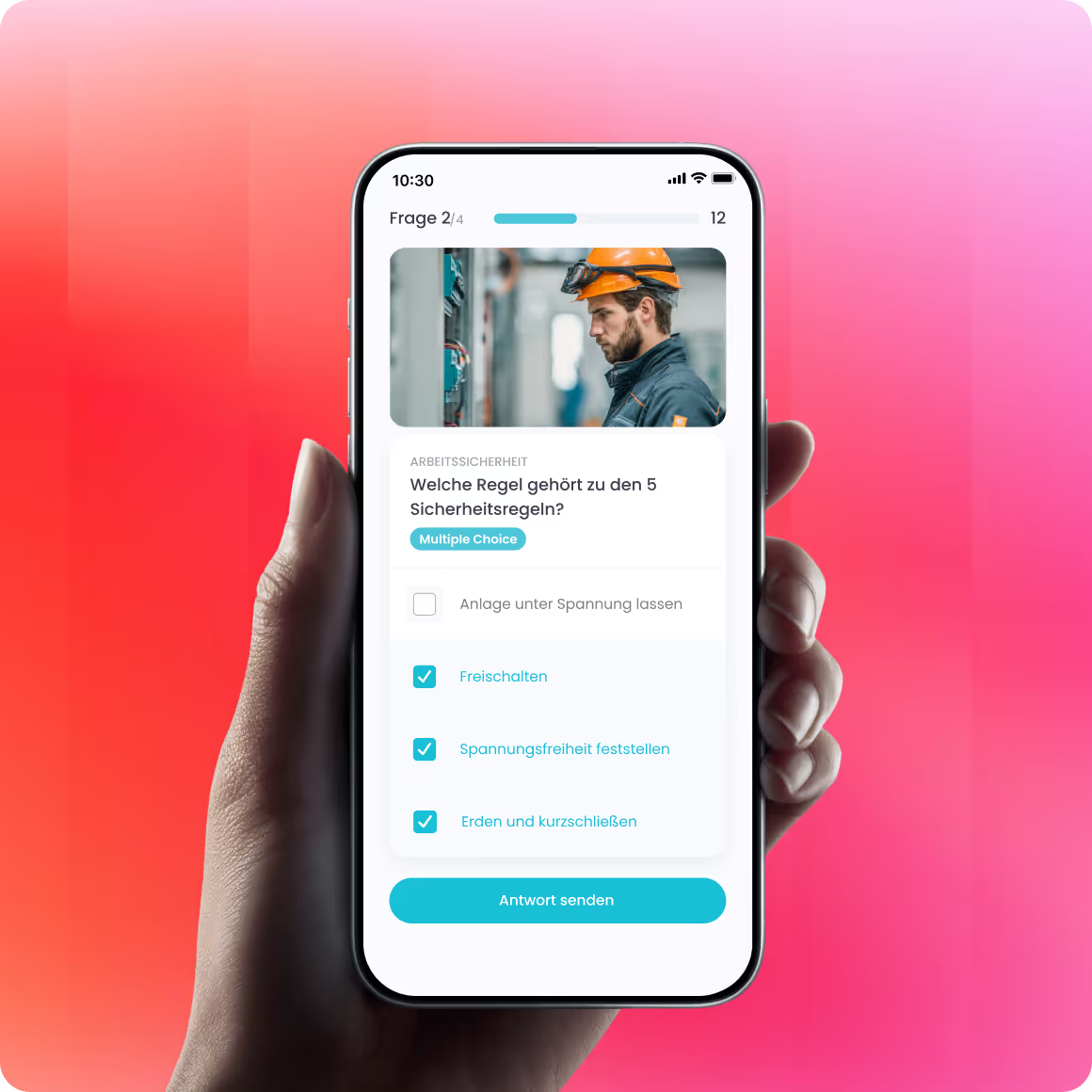
keelearning is a mobile-first training platform for frontline and deskless teams—such as those in manufacturing, retail, hospitality, or healthcare. Employees learn directly on the job via an app, without the need for a laptop or company email address, in over 20 languages. In addition to traditional courses, keelearning focuses on gamification elements and a knowledge community for team interaction, as well as open APIs and integrations, which allow the platform to be embedded into an existing software ecosystem.
reteach positions itself as a classic compliance LMS for German SMEs. The focus is on mandatory training, onboarding, and quality management for office and knowledge workers, featuring a particularly fast implementation process without a traditional IT project, as well as a very extensive course library as an add-on.
The biggest differences between the two platforms lie less in the basic concept of an LMS and more in three areas: access (mobile app vs. browser), course creation (didactically guided AI assistant vs. AI structure generator based on a description), and social learning. In the latter, keelearning distinguishes itself with its knowledge community, a feature not advertised on the reteach website.
keelearning vs. reteach feature comparison
The following table shows the most important differences at a glance. You can find details on the individual points below.
Mobile usage and accessibility
The biggest structural difference lies in accessibility: keelearning is designed as a standalone app, meaning employees don't need a company email address or a desk-based computer – a crucial factor for teams without fixed workstations. In contrast, reteach uses a browser-based model, which is primarily suited for employees who already work at a computer on a regular basis.
Course library and custom content
In terms of the sheer number of courses, reteach leads with 500+ courses—however, this course catalog is a separately bookable add-on and is not automatically included in the base price. The reteach base package only includes the free "AI College" with 7 courses. With 160+ course templates, keelearning offers a smaller library that is specifically tailored to frontline topics and is already integrated directly into the LMS in the base package—meaning courses can be assigned immediately without any additional purchases.
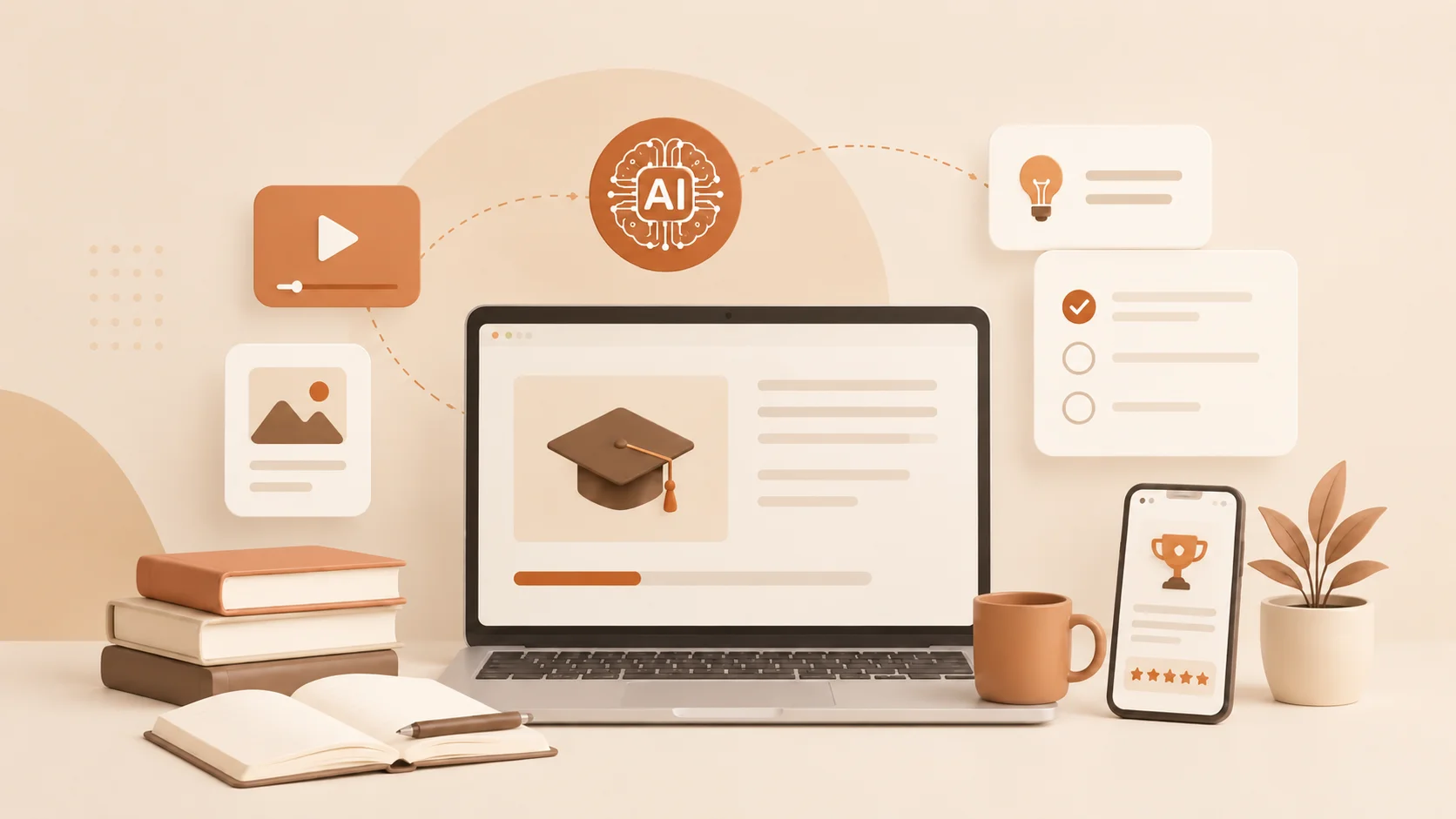
Both providers also take slightly different approaches to creating custom content: The AI course assistant in the authoring tool from keelearning is built on a sound pedagogical foundation—it guides you through course creation step-by-step and provides relevant course content based on your own input, supplemented by an automatic quiz question generator. reteach allows users to generate course structures and lesson texts from a short description—optionally including the upload of PDF, PPT, DOCX, image, or video files as additional context—also offers quiz creation for each lesson, and scores points with a drag-and-drop editor as well as the automated conversion of existing PDF or PowerPoint documents into video courses.
Gamification and knowledge community
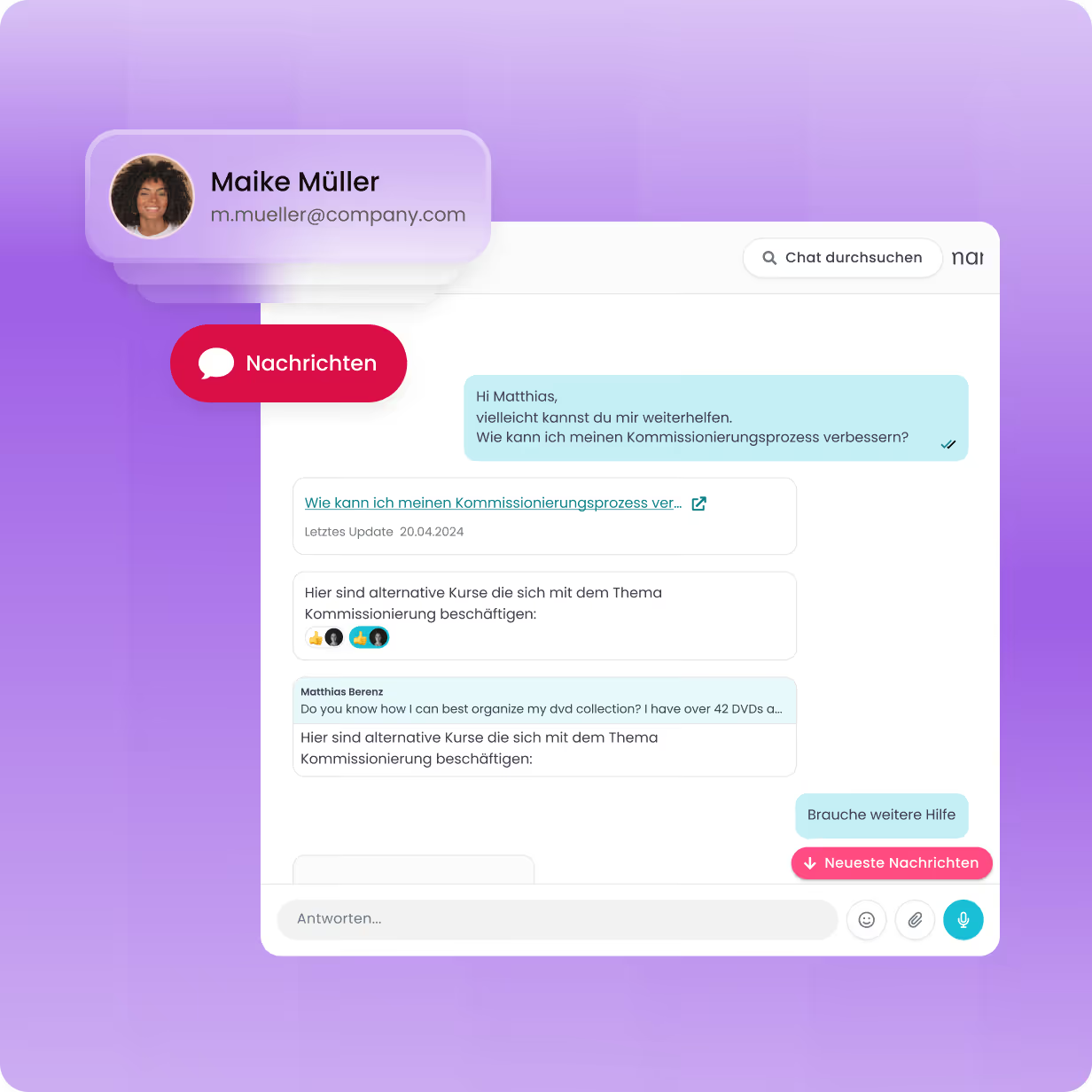
Another difference lies in the playful and social aspect of learning: Quiz battles, badges, and leaderboards motivate regular usage in keelearning, while the knowledge community allows employees to comment on course content, ask questions, and access company knowledge directly through exchanges with colleagues—instead of having to search for it laboriously. Compared to reteach, which does not advertise comparable gamification or community features on its website, the knowledge community is a clear unique selling point of keelearning.
Mandatory training, compliance, and IT security
reteach focuses clearly on automated mandatory training: deadlines, reminders, and certificate management are automated, supplemented by add-on phishing awareness simulations. keelearning also offers test and certificate modules as well as notifications and escalation levels for mandatory training, but places a stronger emphasis on practical, mobile-first delivery.
APIs, integrations, and your software ecosystem
A learning management system rarely operates in isolation—it usually needs to fit into the existing HR and system landscape. Here, keelearning offers an open REST API as well as pre-built integrations with HR systems such as Personio, HR-Works, Factorial, and Kenjo, as well as Shopify and Salesforce. If a desired connection is missing, it can be implemented individually upon request. This allows keelearning to be expanded into a central access point from which you can reach your entire learning and HR system landscape—an ecosystem approach also pursued by other providers. reteach offers API access and HR tool connections starting with the Professional package.
Price comparison: keelearning vs. reteach
Both providers tier their prices based on the number of users. The following overview shows the publicly available packages—for an individual quote, it is recommended in both cases to contact the provider directly.
Note: Prices apply to annual billing; the price per user decreases as the team size grows (from €5.98 to €1.99 per user).
Note: Monthly or annual billing can be selected, and according to the provider, a 14-day free trial is offered.
keelearning or reteach: Which platform is right for whom?
keelearning is particularly suitable if…
• Your employees primarily work without a fixed desk, PC access, or company email address – for example, in production, retail, hospitality, or healthcare.
• Your teams are spread across multiple countries or languages.
• You value exchange between employees – through gamification and knowledge communities – rather than just the pure transfer of knowledge.
• You are looking for a platform that can be tightly integrated into your existing HR and system landscape via open APIs.
reteach is particularly suitable if …
• Your employees primarily work at a desk and learn mainly via a browser.
• Phishing simulations and IT security awareness training are a core requirement.
• You are prepared to book the corresponding course catalog add-on for a very broad library of 500+ courses.
{{inline-cta}}
FAQ: keelearning vs. reteach
What is the most important difference between keelearning and reteach?
keelearning is designed for mobile learning for frontline and deskless teams, while reteach, as a classic compliance LMS, is geared more toward office and knowledge workers in medium-sized companies.
Is keelearning or reteach more affordable?
There is no one-size-fits-all answer to this: Both providers publish tiered starting prices – keelearning has fixed core packages based on the number of users, while reteach has starting prices for Essential (from €150/month), Professional (from €317/month), and Enterprise (from €450/month). The actual final price for both depends on individual configuration, such as whether the additional course catalog is booked with reteach. A direct comparison is therefore only worthwhile once you have a specific quote for your number of users and functional requirements.
Does the reteach course library cost extra?
Generally, yes. The base price of reteach includes the free "AI College" with 7 courses; the larger course catalog with 500+ courses is, according to the provider, a separately bookable add-on. With keelearning, the 160+ course templates in the course library are already included in the base package and can be used directly in the LMS.
Does keelearning also offer API integrations like reteach?
Yes. keelearning offers an open REST API as well as pre-built integrations with HR systems such as Personio, HR-Works, Factorial, and Kenjo, as well as Shopify and Salesforce. If a desired integration is missing, you can request it from the keelearning team – you can find details on the page Interfaces and integrations.
Can I test reteach or keelearning for free?
According to its website, reteach offers a 14-day free trial. For keelearning, we recommend a non-binding demo where you can explore the platform using your own specific use cases. If you are interested in keelearning after that, you will be given access to a test environment.
Which industries is keelearning best suited for?
keelearning is frequently used in industries with a high proportion of deskless employees, such as manufacturing, retail, hospitality, and healthcare. Customer training can also be effectively implemented with keelearning, making it the LMS of choice for software companies.
keelearning or reteach: The decision depends on your target audience
Neither keelearning nor reteach is the "better" choice across the board – both platforms are built for different starting points. As a mobile LMS, keelearning's strengths clearly lie in the combination of an integrated course library, didactically guided course creation, and a knowledge community that serves as a unique feature for team collaboration. If your employees work primarily on the go, in decentralized locations, or without a company email address, there is a strong case for it. If, on the other hand, the focus is on the automated management of standard compliance training and IT security training for office teams, reteach may be the more suitable solution.
The best way to judge this is based on your own use cases. Feel free to schedule a non-binding demo and experience how keelearning feels for your team.
Key Takeaways
- keelearning and reteach are both German LMS providers, but they focus on different areas.
- keelearning is designed for mobile learning for frontline and deskless teams – including a knowledge community and an open API connection to your existing HR and system landscape.
- reteach positions itself as a compliance LMS for office and knowledge workers in the SME sector, with an optional focus on phishing awareness and automated mandatory training.
- In terms of the sheer number of courses, reteach offers a larger selection with 500+ courses – though these are a separately bookable add-on. keelearning scores points with 160+ course templates that are integrated directly into the LMS in the basic package, plus a pedagogically sound AI course assistant for your own content.
- Both providers publish tiered entry-level prices: keelearning shows fixed core packages for up to 500 users, while reteach lists starting prices for Essential, Professional, and Enterprise.
Table of Contents
Ready for training that works?
Get to know keelearning in a personal demo – no obligation and tailored to your needs.
Share
Lorem ipsum dolor sit amet, consectetur adipiscing elit. Suspendisse varius enim in eros elementum tristique. Duis cursus, mi quis viverra ornare, eros dolor interdum nulla, ut commodo diam libero vitae erat. Aenean faucibus nibh et justo cursus id rutrum lorem imperdiet. Nunc ut sem vitae risus tristique posuere.



The learning platform for businesses looking to make their training simple, mobile, and accessible to all – with no IT overhead.