All blog posts
Published on
08.08.2018
5 steps for the digital transformation of corporate culture

Norma Demuro
E-Learning Expert, CEO @ keelearning
description

This cannot end well: The company management decides that all employees should work more digitally. The first measure is to introduce a project management app such as Trello in all departments. And then it just stays like that for now, because that's already quite digital, right? This is a fundamental error in thinking, because a digital corporate culture is shaped by the interaction within teams and an understanding of the modern working world – technology only comes after that. Find out here what the decisive steps are on the path to a digitized company.
Step 1: Get employees on board
A restructuring must always be supported by all employees of a company. This includes listening to them first. What wishes do they have regarding a digital corporate culture? How could work processes in individual departments be simplified in a very practical way through the use of digital tools? The colleagues working on the front line often know best what is needed for optimal work. The decision about which direction digitalization should take should therefore be supported by everyone.
Step 2: Promote decentralized work
Digitalization in the working world cannot be separated from concepts like "New Work." Digital technologies in particular make it possible for employees to have time- and location-independent access to the company network, allowing them to work from home, for example. Employees should also be empowered in their self-responsibility by being able to schedule their own working hours.
Step 3: Make digital technologies the foundation
The project management app, the social media channel as a measure for e-recruiting, or the explanatory video for trainees in production: Digital tools should not just be tacked onto conventional work and learning structures. They must be integrated into the workflows and processes as part of a digital transformation and form the new basis for thinking, planning, and acting at all levels.
Step 4: Form project-related teams
A digital corporate culture also includes cross-departmental collaboration. It has proven successful in many companies to break down structures and organize employees into teams on a project-by-project basis. This allows specialists from very different areas to work on a single topic. If, for example, a new product is being developed, designers can work with engineers on feasibility, while sales can already communicate how the product will reach customers. The finance department raises a hand from time to time to keep production costs within a feasible framework.
Step 5: Lifelong learning
Another aspect of a modern, digital corporate culture is the promotion of lifelong learning. Employees should always be motivated to continue their education even beyond company boundaries. Employers can benefit when colleagues bring back fresh ideas from their excursions outside the box. In-company training can be given a communicative drive with learning apps. When colleagues or departments compete against each other in a quiz, it can boost team spirit and thus ensure a lively atmosphere.
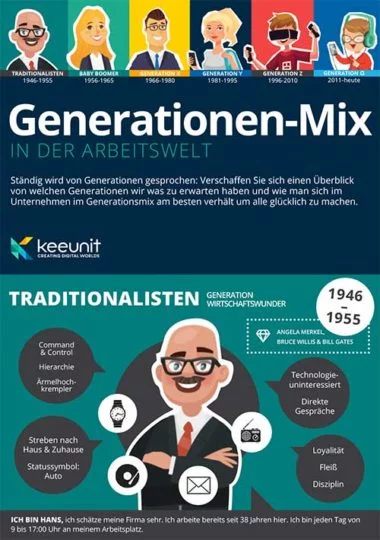
Would you like to drive digitalization in your company, but are having trouble grasping the needs of all your employees? Then get an initial overview with our infographic "Generation Mix in the Working World."
Key Takeaways
Table of Contents
Ready for training that works?
Get to know keelearning in a personal demo – no obligation and tailored to your needs.
Share
Lorem ipsum dolor sit amet, consectetur adipiscing elit. Suspendisse varius enim in eros elementum tristique. Duis cursus, mi quis viverra ornare, eros dolor interdum nulla, ut commodo diam libero vitae erat. Aenean faucibus nibh et justo cursus id rutrum lorem imperdiet. Nunc ut sem vitae risus tristique posuere.






The learning platform for businesses looking to make their training simple, mobile, and accessible to all – with no IT overhead.