All blog posts
Published on
Knowledge management in production: methods, software, and best practices

Lisa Kubatzki
Senior Content Marketing Manager @ keelearning
description

When experienced specialists leave a company, it often means more than just the loss of a worker. They take with them machine knowledge, practical experience, troubleshooting expertise, and "insider" tips that are rarely fully documented.
In production, vital knowledge is created where the daily work happens: at machines, during shifts, in maintenance, in quality assurance, or while onboarding new employees. This knowledge determines how quickly malfunctions are resolved and quality standards are maintained.
In this article, you will learn what knowledge management in production means, which methods work in day-to-day manufacturing, and which software is suitable for the task.
TL;DR: Production Knowledge Management
· Knowledge management in production secures experiential knowledge, process knowledge, safety knowledge, and technical know-how.
· Knowledge transfer is particularly critical for production staff without a dedicated desk, in shift operations, and for complex machine processes.
· Proven methods include microlearning, knowledge mapping, lessons learned, mentoring, digital work instructions, and knowledge communities.
· Successful knowledge management is based on three pillars: people, organization, and technology.
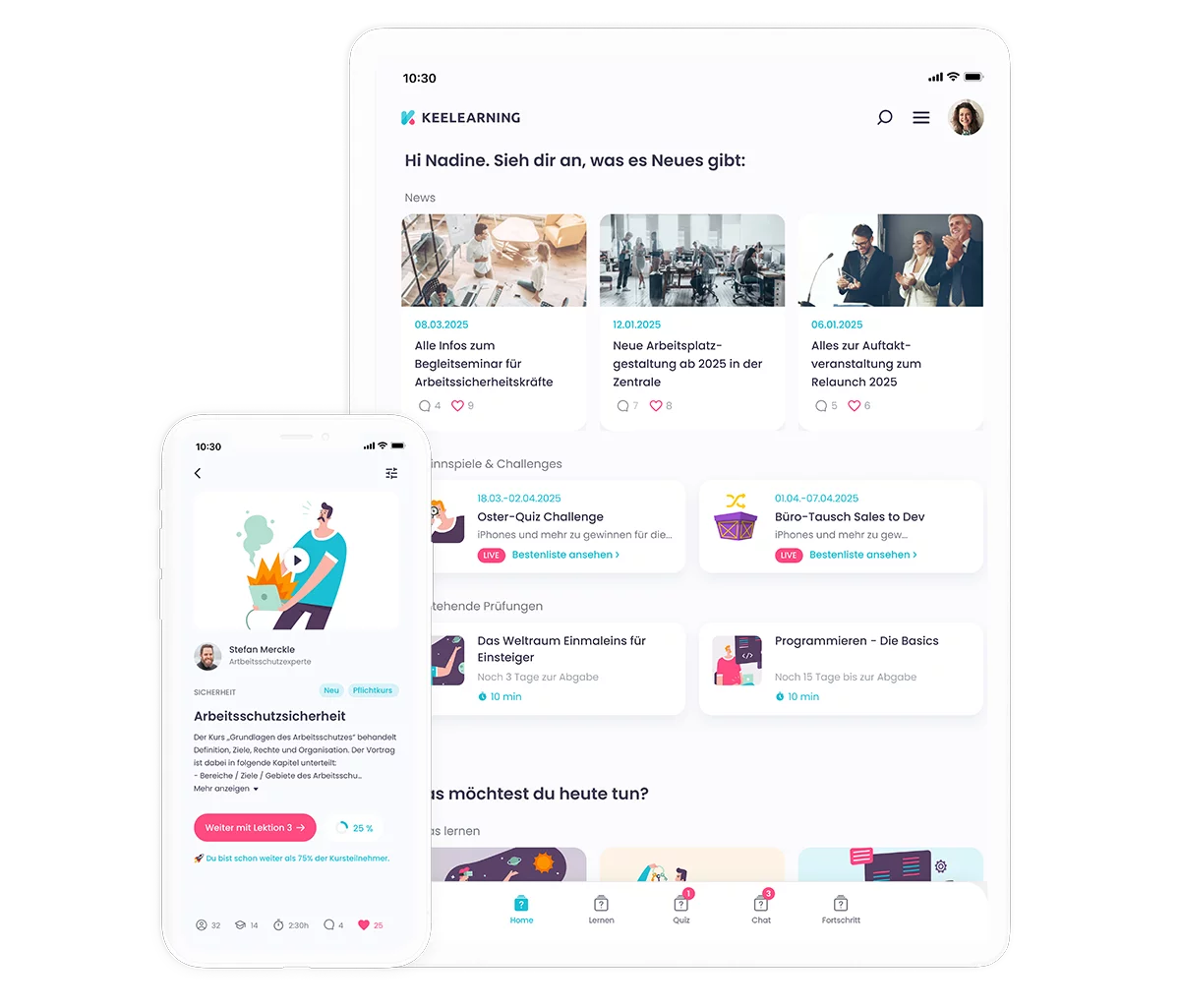
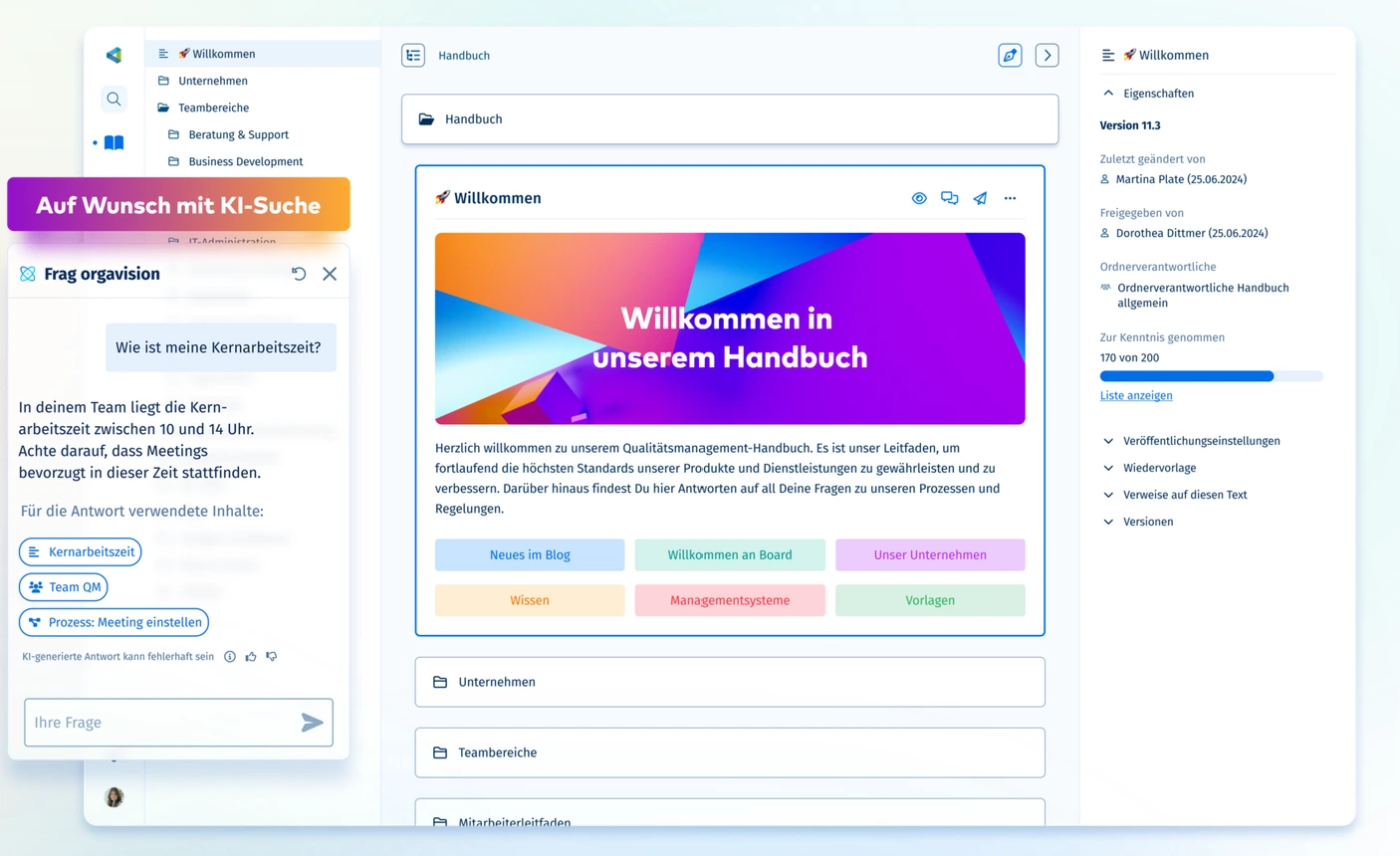
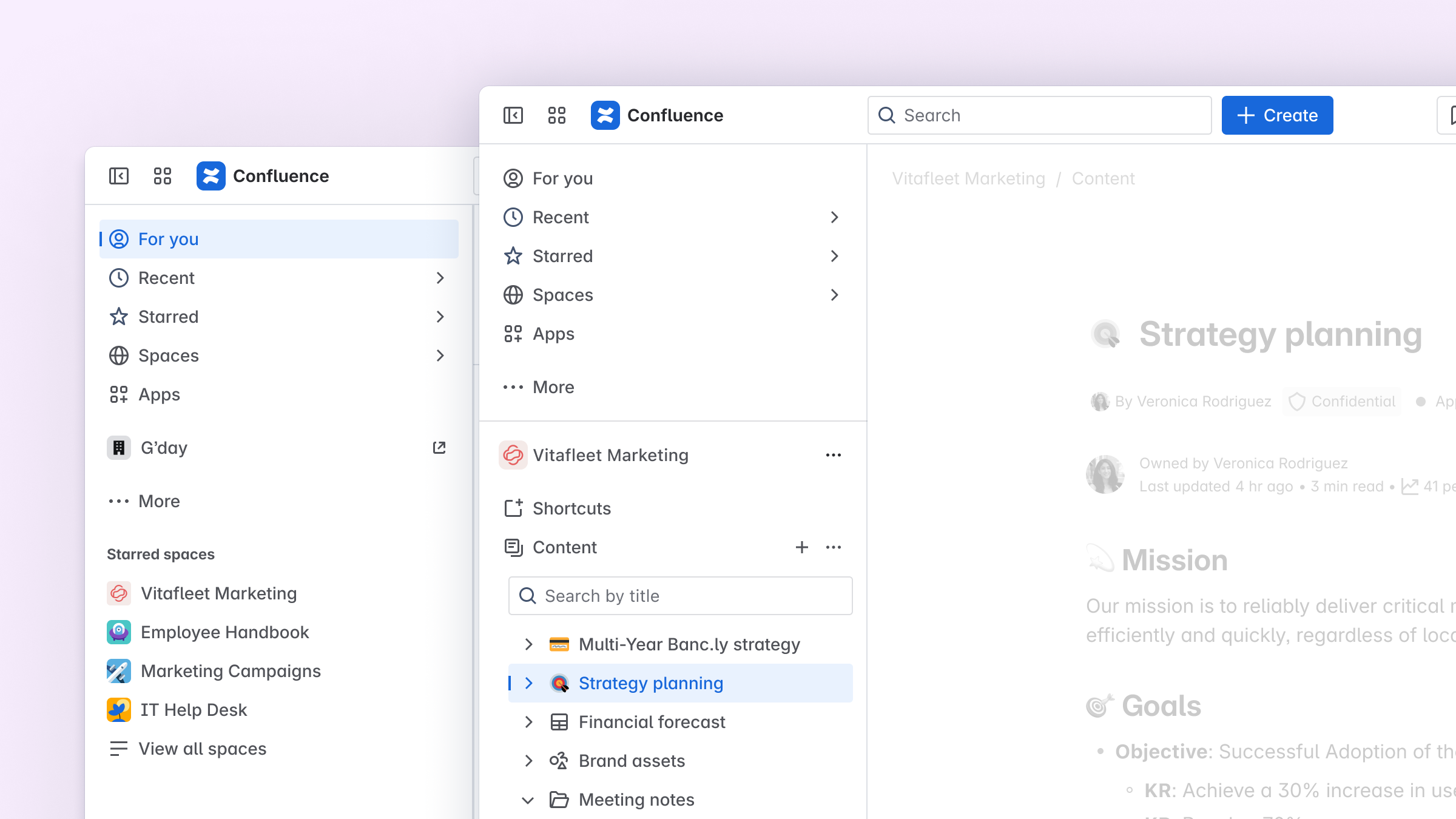
· In our software comparison, we look at keelearning, Confluence, orgavision, Quanos InfoTwin and amberSearch keelearning is the ideal solution when you need to combine knowledge management, training, safety briefings, a mobile app, multilingual support, and reporting into a single platform.
Discover keelearning for production teams
What is knowledge management in production?
Knowledge management in production encompasses all the measures manufacturing companies use to capture, structure, share, and maintain up-to-date knowledge. This includes technical information, work instructions, safety requirements, quality standards, process knowledge, and experiential expertise.
Unlike general knowledge management, knowledge in manufacturing must be accessible extremely quickly. An operating instruction on the intranet is only helpful if employees can find, understand, and apply it at the right moment. Read more about this in our article on Knowledge management in companies.
Implicit and explicit knowledge in manufacturing
For manufacturing companies, the distinction between explicit and implicit knowledge is particularly important. Explicit knowledge is already documented. This includes:
• Work instructions
• SOPs (Standard Operating Procedures)
• Checklists
• Maintenance schedules
• Inspection logs
• Safety requirements
• Training materials
Implicit knowledge, on the other hand, is gained through experience. It is rooted in observation, routine, and problem-solving. Here are some examples from production:
• A skilled worker can tell by the sound when a machine isn't running smoothly.
• A shift supervisor knows which changeover step frequently causes delays.
• A maintenance technician is familiar with typical fault patterns that are only briefly described in the manual.
• An experienced employee knows which safety rule is most often misunderstood.
This exact type of experiential knowledge is both valuable and at risk. That is why it should not just be passed on verbally, but systematically made visible.
Why knowledge management is so critical in production
Production facilities are under immense pressure. Delivery deadlines, quality, safety, and machine availability must all be maintained simultaneously. Consequently, a lack of knowledge quickly becomes an operational risk.
Shift work complicates knowledge transfer
What happens during the morning shift must also be understandable for the late and night shifts. When disruptions, deviations, or solutions are only passed on verbally, knowledge gaps emerge. Digital documentation and brief updates help make insights available across all shifts.
The skilled worker shortage increases the pressure
Experienced specialists are hard to replace. Without structured knowledge transfer, onboarding takes longer, questions pile up, and mistakes are repeated. Especially with complex systems, it is risky to leave critical know-how with only a few individuals.
Knowledge is scattered
Production knowledge is often hidden in folders, emails, PDFs, Excel files, shift logs, ticketing systems, or in the minds of individual experts. As a result, it is often unclear which information is current and where employees should look.
Language barriers hinder understanding
Many production teams are international. When safety briefings, work instructions, or quality standards are only available in one language, risks arise. Automatic translation can help make key content available in multiple languages more quickly.
Compliance requires documentation
Occupational safety, DGUV-relevant training, hygiene, quality, and compliance must not only be taught but often also documented. A Online Safety Training helps you organize mandatory training sessions digitally and transparently. Learn more on our page Online Safety Training for Manufacturing Companies.
The 3 Pillars of Knowledge Management
Knowledge management only works when people, organization, and technology are considered together.
1. People
Employees only share knowledge if it is easy to do and recognized. This requires a culture where questions are encouraged, experiential knowledge is made visible, and experts are actively involved.
Mentoring, short practical videos, shift meetings, knowledge posts, and recognition for shared knowledge are all helpful.
2. Organization
Knowledge must be maintained. This requires clear responsibilities:
• Who creates content?
• Who reviews work instructions?
• Who updates training?
• How are lessons learned documented?
• Which roles require which knowledge?
Knowledge management should be closely integrated with shift handovers, onboarding, quality management, safety training, and continuous improvement.
3. Technology
Digital platforms make knowledge accessible. For manufacturing companies, the following are particularly important:
• mobile access
• simple search
• Multilingual content
• Role and location management
• Short learning formats
• Reporting
• Communication features
• Proof of training
A corporate learning app allows you to centrally bundle SOPs, operating instructions, maintenance guides, training videos, and updates.
Knowledge management methods in production
Not every method is suitable for every production environment. These approaches are particularly practical.
Microlearning and training videos
Short learning units fit better into the daily production routine than long training sessions. Suitable content includes machine startup, cleaning steps, safety rules, error patterns, or quality criteria.
Knowledge maps
A knowledge map shows what knowledge exists and who possesses it. This makes critical knowledge gaps visible, for example, if only one person is truly familiar with a specific machine.
Lessons learned
Insights should be documented after disruptions, audits, or production ramp-ups. A simple format is often sufficient:
- What happened?
- Why did it happen?
- What was the solution?
- What can other teams learn from this?
Mentoring
Experiential knowledge cannot be fully digitized, which is why mentoring remains essential. It is most effective when experienced employees also capture their knowledge in checklists, videos, or learning paths.
Knowledge communities
A digital knowledge community helps make questions, experiences, and best practices visible across shifts and locations. With communication and community features, companies can structure this exchange and gather feedback.
Integrating production staff without fixed workstations
Knowledge management in production only works if it fits the reality of the job. Employees on the shop floor need quick access to relevant content, not another complicated channel.
Key elements include:
• mobile app
• short-form content
• clear language
• QR codes on machines
• tablets in the production area
• multilingual content
• learning paths by role, location, or machine
• simple search function
Mobile access is particularly valuable during onboarding. It provides new employees with guidance on safety rules, quality standards, shift procedures, points of contact, and initial tasks.
You can find more on common pitfalls in the article Challenges in training production employees.
Which software is suitable for knowledge management in production?
Knowledge management software for production can have different focuses. Some systems store knowledge, while others make it searchable. Still others combine knowledge management with training and certification.
LMS with knowledge management
An LMS with knowledge management features combines content, training, learning paths, tests, and reporting. This option is particularly suitable when knowledge needs not only to be found but also taught and verified.
Wiki and documentation systems
Wiki systems are well-suited for documentation and collaborative knowledge articles. Limitations arise when mobile training, mandatory briefings, or tracking learning progress are required.
QM and process platforms
QM systems support document control, standards, and processes. They are strong in quality and audits, but they do not automatically replace a learning system for operational teams.
AI-powered search
Enterprise search systems help find distributed information faster. However, they do not automatically answer the question of whether employees have understood the content.
Knowledge base or LMS: What is the difference?
A knowledge base stores information. An LMS also imparts knowledge.
For production companies, an LMS is particularly useful when knowledge needs to be not just available, but also learned, verified, and documented.
Software comparison: Production knowledge management
Disclaimer: The research for this comparison was conducted in July 2027. We strive to keep all information as current as possible and update it regularly. However, if you would like to familiarize yourself with our competitors' offerings, you should view them via their official websites or contact a representative.
Implementing knowledge management software: 5 steps
1. Take stock
Check where knowledge currently resides: folders, PDFs, shift logs, emails, ticketing systems, or individual experts.
2. Prioritize critical knowledge
Start with topics that directly impact safety, quality, and productivity: machine operation, troubleshooting, safety training, quality inspections, and onboarding.
3. Define requirements
Key criteria include mobile accessibility, multilingual support, easy search, learning paths, certification, reporting, data privacy, and role-based permissions.
4. Launch a pilot
Start with one plant, one line, one shift team, or a specific training topic. This allows you to test acceptance and content before rolling it out broadly.
5. Measure usage
Regularly check which content is being used, where knowledge gaps are emerging, and which training sessions are still pending.
How do you measure success?
Knowledge management should be measurable. Otherwise, it remains unclear whether the content is actually helpful.
Useful KPIs include:
If a topic is frequently searched for or many employees fail the same knowledge check, it indicates a specific training need. This turns knowledge management into a manageable process.
keelearning for knowledge management in production
keelearning is particularly well-suited for manufacturing companies that want to actively share knowledge rather than just store it.
The most relevant features are:
• Knowledge community and chat for sharing experiential knowledge between shifts and locations
• ready-made courses for manufacturing companies
• automatic translation for multilingual teams
• Media Library & News for SOPs, operating instructions, and updates
• mobile app for employees without a desktop workstation
• statistics and analytics to identify knowledge gaps
• Online safety training for mandatory digital training
Request a free demo now
Knowledge management becomes a production advantage
Knowledge management in production is more than just a digital filing system. It helps companies better manage skilled labor shortages, shift work, quality requirements, and increasing machine complexity.
Structuring production knowledge, making it available on mobile devices, and linking it with training reduces knowledge loss, accelerates onboarding, and increases process reliability. Knowledge management becomes particularly valuable when experiential knowledge is no longer tied to individual people but becomes usable for teams, shifts, and locations. With keelearning, manufacturing companies bundle knowledge management, training, safety instructions, multilingualism, community, and reporting into one platform. This creates a digital learning and knowledge space that doesn't end at the office desk but fits directly into everyday production life.
Schedule a free demo appointment
FAQ: Knowledge management in production
What is knowledge management in production?
Knowledge management in production encompasses the capturing, structuring, distribution, and further development of production knowledge. This includes experiential knowledge, safety knowledge, process knowledge, and machine know-how.
How do I prevent knowledge loss when experienced employees leave?
Identify critical knowledge early, use knowledge maps, document lessons learned, establish mentoring, and make experiential knowledge digitally accessible.
Which software is suitable for knowledge management in manufacturing?
Depending on your goal, LMS platforms, wiki systems, quality management software, AI-powered search systems, or technical documentation platforms are suitable. If knowledge needs to be taught and verified, an LMS with knowledge management features is a good choice.
How do I involve production employees who don't have a desk job?
Focus on mobile accessibility, short learning content, simple language, multilingual content, QR codes on machines, tablets on the production floor, or mobile apps. This is where keelearningexcels.
Do I need both a knowledge base and an LMS?
Not always. A knowledge base stores information. An LMS goes further by delivering knowledge through learning paths, courses, tests, training sessions, and analytics. Manufacturing companies often benefit from a solution that combines both.
Table of Contents
Ready for training that works?
Get to know keelearning in a personal demo – no obligation and tailored to your needs.
Share
Lorem ipsum dolor sit amet, consectetur adipiscing elit. Suspendisse varius enim in eros elementum tristique. Duis cursus, mi quis viverra ornare, eros dolor interdum nulla, ut commodo diam libero vitae erat. Aenean faucibus nibh et justo cursus id rutrum lorem imperdiet. Nunc ut sem vitae risus tristique posuere.





The learning platform for businesses looking to make their training simple, mobile, and accessible to all – with no IT overhead.