All blog posts
Published on
28.05.2026
Creating Online Courses: Platforms, Tips and Best Practices

Lisa Kubatzki
Senior Content Marketing Manager @ keelearning
description

Creating online courses sounds simple at first: upload content, add a quiz, publish. In practice, however, it is not the tool alone that determines success. The decisive factor is whether your course has a clear goal, suits the target group, and is actually used in everyday life.
Anyone who wants to create online courses for corporate training, onboarding, product training, or operational teams needs a platform that not only provides content but also structures learning, makes progress visible, and rolls out training in a scalable way.
The situation is different if you want to sell online courses publicly. Then you need a sales platform with payment processing, landing pages, and marketing functions. With this article, we offer you guidance when it comes to creating online courses and choosing the right tool.
Too Long, Didn’t Read: Creating Online Courses in Brief
- Start with the target group, learning objective, and application situation.
- Choose the platform according to purpose: corporate training, customer training, course sales, or open course library.
- Divide content into short, clear modules instead of long training sessions.
- Use videos, checklists, quizzes, and knowledge checks in a targeted manner.
- When choosing software, pay attention to the authoring tool, mobile usage, reporting, roles, rights, and easy updates.
- For companies, an LMS solution like keelearning is worth it if courses are to be created, distributed, and evaluated regularly.
With keelearning, you can create learning content centrally, distribute it in a targeted manner, and always keep an overview of progress and knowledge levels.
What does it mean to create online courses?
Creating online courses means preparing knowledge in such a way that learners can use it digitally, in a structured and repeatable manner. A good online course is not just a digitally filed manual. It guides you step by step through a topic, makes content understandable, and helps learners apply knowledge directly.
Typical online courses are:
- Onboarding courses for new employees
- Product training for sales, service, or customers
- Mandatory training on compliance, safety, or hygiene
- Process training for operational teams
- Training for software, tools, or new workflows
- Courses for coaches, creators, or professionals who want to sell knowledge
The most important difference lies in the goal. A company usually wants to impart knowledge consistently, ensure quality, and reduce training effort. A creator often wants to build reach, sell courses, and process payments. Both create online courses, but they need different platforms.
What types of online course platforms are there?
Not every platform that allows you to create online courses is an LMS. And not every LMS is suitable for selling courses. This distinction will save you a lot of effort later.
Platform TypeSuitable forTypical functionsLMS for companiesEmployee training, customer training, onboardingLearning paths, roles, reporting, certificates, authoring toolAuthoring toolCreation of interactive learning contentCourse construction, quizzes, media, templates, exportSales platformCourse sales, coaching, digital productsPayment processing, landing pages, vouchers, email functionsMarketplaceReach for individual coursesExisting user base, course catalog, reviewsOpen-source LMSEducational institutions, individual setupsFlexible customization, hosting, extensions
For corporate training, an LMS with an integrated authoring tool usually makes sense. This allows you to create content, assign target groups, track learning progress, and update courses regularly. For pure course sales, sales platforms are stronger because they directly incorporate payment processes and marketing.
Creating online courses: Step by step
A good online course is not created by uploading existing presentations unfiltered. It is created through clear prioritization. These steps will help you with this.
https://www.youtube.com/watch?v=9cHfNqkn1qY&t=2s
1. Define goals and target group
Start with the question: What should learners be able to do after the course?
A good learning objective is concrete. Instead of "Employees know the return process," it is better to formulate: "Employees can correctly accept, check, and document a return."
Also clarify:
- Who is using the course?
- What prior knowledge exists?
- In what situation is learning taking place?
- Is learning done at a desk, on mobile, or directly at the workplace?
- Must the course be available in several languages?
Especially for first-line teams, mobile usage is crucial. Content must be quickly accessible and work without long explanations.
2. Prioritize content
Not every topic needs a complete course immediately. Start with content that provides the greatest benefit. Topics where there are frequent inquiries, errors, or quality differences are particularly suitable.
Prioritize based on three questions:
- What prevents typical errors?
- What saves time in everyday work?
- What improves quality, safety, or the customer experience?
This creates a course program that does not appear overloaded but solves real problems.
3. Collect and structure knowledge
Many companies already have enough knowledge. It is just scattered: in presentations, PDFs, emails, manuals, or in the heads of experienced team members. Collect this content and check what is still current.
Helpful sources are:
- Existing training documents
- Support questions
- Process documentation
- Frequent errors
- Feedback from onboarding or training
- Practical tips from experienced team members
Then structure the knowledge into modules. Each module should have a clear topic, a learning objective, and a direct practical connection.
4. Design course modules to be short and applicable
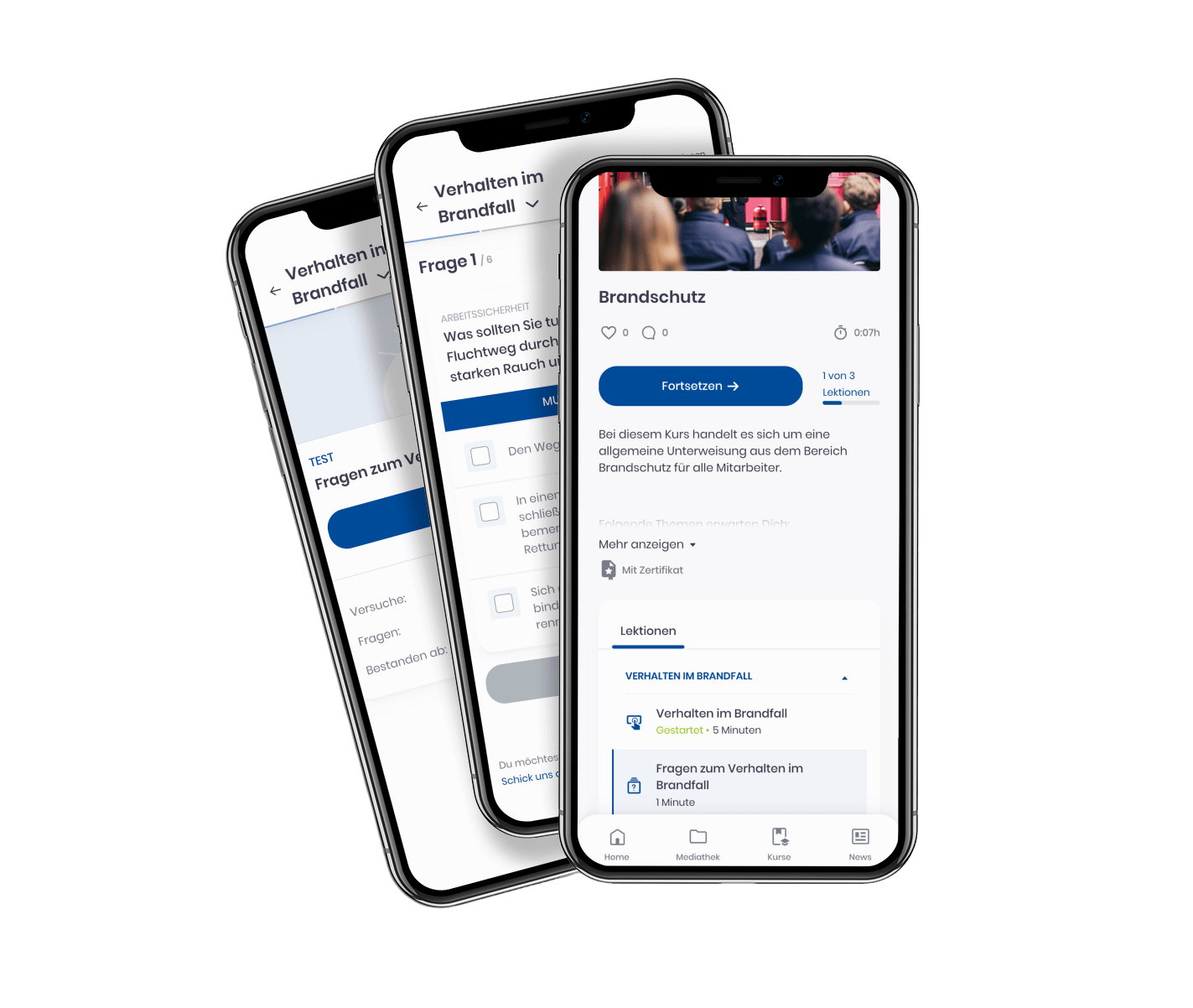
Online courses work better when they are easy to consume. Long blocks of theory quickly lead to dropouts. Short modules with a clear task are better.
A sensible module consists of:
- Context: Why is the topic important?
- Instructions: What exactly needs to be done?
- Example: What does it look like in practice?
- Error avoidance: What do learners need to pay attention to?
- Knowledge check: Was the most important thing understood?
Example: Instead of a 45-minute training course on the POS system, create five short modules: login, sales process, cancellation, discount, end-of-day closing. This way, learners find exactly the knowledge they need right now faster.
5. Choose suitable formats

Not every piece of content needs a video. Choose the format according to the learning objective.
- Step-by-step instructions are suitable for processes.
- Videos are suitable for handling, software workflows, or product demos.
- Checklists are suitable for standards and controls.
- Quizzes are suitable for knowledge retention.
- Infographics are suitable for workflows, roles, or decision paths.
- Audio formats are suitable for short updates or repetition.
Important: The format must make everyday life easier. A short explanatory video can do more for a practical task than a long text. A checklist can be more helpful for standards than a webinar.
6. Create course on a platform
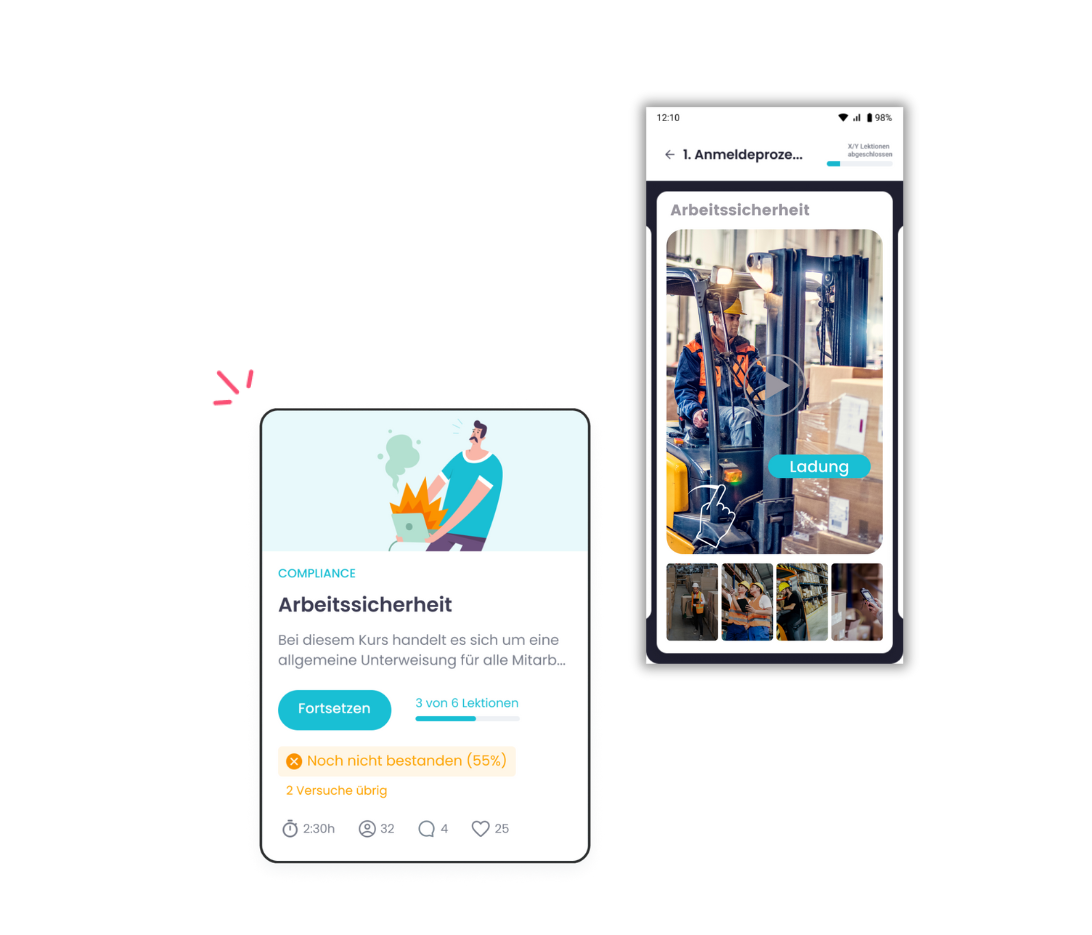
With a platform like keelearning, you can create courses directly in the authoring tool, structure content, and distribute learning paths. This is particularly helpful if you want to use training not just once but regularly.
7. Test and improve the course
Before you roll out a course widely, test it with a small group. Do not just ask if they liked the course. Ask specifically:
- Was the goal clear?
- Was the content understandable?
- Was something missing?
- Was the course too long?
- Could the knowledge be applied directly?
- What questions remain open?
This feedback significantly improves quality. Furthermore, acceptance increases when learners notice that their feedback is taken seriously.
What you should pay attention to when creating online courses
An online course becomes effective when content, platform, and application situation fit together. Pay special attention to these points.
Clear learning objectives instead of information collection
A course should not contain everything that exists on a topic. It should contain what learners need to do a specific task better. Shorten consistently if content has no direct benefit.
Mobile usage
Many learners do not have a fixed desk workspace. Therefore, courses should work well on smartphones and tablets. Short modules, clear navigation, and simple media formats are particularly important here.
Easy updates
Online courses age quickly if processes, products, or rules change. Choose software with which content can be easily maintained. Otherwise, outdated versions and uncertainty arise.
Roles and target groups
Not all learners need the same content. Admins, new employees, managers, sales teams, or customers have different questions. Good platforms therefore enable clear target groups and learning paths.
Knowledge checks and reporting
Without evaluation, it remains unclear whether a course works. Quizzes, completion rates, and learning progress show whether content has been understood. For mandatory training, proof is particularly important.
Practical relevance
Online courses should reflect everyday work. Use real examples, typical errors, and concrete steps for action. This builds trust, and the course is not perceived as an additional task, but as a help.
Creating online courses with the right platform
Creating online courses is not just a content project. It is a system for building knowledge. Anyone who only uploads content does not yet create effective learning. Only through clear learning goals, sensible modules, suitable formats, and a suitable platform does a course emerge that is used.
For companies, it is particularly important that courses remain scalable. New employees, changing processes, product updates, or customer training create a regular need for learning. A platform like keelearning supports exactly that: you create content centrally, distribute it appropriately, and keep track of learning progress. Book your free demo now or click through the product tour of our authoring tool!
You can find more professional insights, current perspectives, and impulses on LinkedIn.
FAQ: Creating online courses
How do I create an online course?
Start with the target group and learning objective. Collect relevant content, divide it into short modules, and add suitable formats such as videos, checklists, or quizzes. Then publish the course on a platform and improve it based on feedback and usage data.
What software do I need to create online courses?
That depends on the goal. For corporate training, an LMS with an authoring tool, reporting, and user management is suitable. For selling courses, platforms with payment processing and marketing functions are suitable. For individual interactive content, a separate authoring tool may be sufficient.
Can I create online courses myself?
Yes. Company-specific content, in particular, can be well created internally if you use an easy-to-use authoring tool. A clear structure is important. For elaborate videos, animations, or complex learning concepts, external support can make sense.
What makes a good online course?
A good online course has a clear learning objective, short modules, practical examples, and simple application steps. It is easily accessible, current, and contains knowledge checks so that learners can check their progress.
Which platform is suitable for corporate online courses?
For corporate online courses, an LMS platform that combines course development, distribution, mobile usage, roles, reporting, and updating is suitable. keelearning is particularly focused on companies, first-line teams, and customer training.
Table of Contents
Ready for training that works?
Get to know keelearning in a personal demo – no obligation and tailored to your needs.
Share
Lorem ipsum dolor sit amet, consectetur adipiscing elit. Suspendisse varius enim in eros elementum tristique. Duis cursus, mi quis viverra ornare, eros dolor interdum nulla, ut commodo diam libero vitae erat. Aenean faucibus nibh et justo cursus id rutrum lorem imperdiet. Nunc ut sem vitae risus tristique posuere.





The learning platform for businesses looking to make their training simple, mobile, and accessible to all – with no IT overhead.