All blog posts
Published on
26.01.2026
The Ultimate E-Learning Guide: All your questions about e-learning answered

Lisa Kubatzki
Senior Content Marketing Manager @ keelearning
description

Are you new to the field of e-learning, or do you already have experience? Our guide is a valuable resource to help you clarify your questions. Discover exciting information about successful e-learning.
What is e-learning?
E-learning, also referred to as electronic learning or online learning, is a form of learning where learners access learning materials and resources via the internet to improve their knowledge and skills. E-learning …
- Encompasses a wide range of technologies and methods to provide, manage, and transmit learning offerings in digital form.
- Can be conducted both synchronously and asynchronously.
- Can be used in various areas such as school education, vocational training, continuing education, and personal development.
- Allows learning to be designed flexibly and independently of time and place.
Are you looking for a professional e-learning provider that offers individual solutions for your company?
E-learning Fundamentals
Where does the term e-learning come from?
The term e-learning comes from English and is composed of the words "electronic" and "learning." It was coined in the 1990s when the spread of computers and the internet increased, making it possible to provide learning content digitally and to learn online.
Since then, the term e-learning has evolved and now encompasses not only learning with the help of computers but also learning with mobile devices such as smartphones and tablets, as well as learning in virtual environments.
What does a virtual classroom mean in e-learning?
In a virtual classroom, learners and instructors can come together online in real-time, similar to a physical classroom. Using tools such as video conferencing, chats, and interactive whiteboards, all participants can communicate and collaborate live.
Virtual classrooms offer the advantage of being independent of geographical locations while enabling high interactivity and collaboration. They are particularly popular in distance education and can be seamlessly integrated into e-learning programs.
Is e-learning digital learning?
E-learning is often referred to as digital learning because it is usually conveyed via digital media and technologies such as computer software, online courses, and mobile applications. With e-learning, learning content can be accessed, edited, and interacted with in digital form. It is a convenient and flexible way to acquire knowledge and skills, as it is accessible regardless of time and place.
However, there are other forms of digital learning that do not necessarily fall under e-learning. For example, digital learning can also take place through the use of simulations, virtual reality, augmented reality, or game-based learning environments.
What is included in e-learning?
E-learning includes various electronic media and technologies used to support or conduct education and training. These include:
- Online courses that are made available via the internet and often contain interactive elements such as quizzes, discussions, and projects.
- Virtual classrooms where students and teachers can interact with each other via the internet.
- Learning Management Systems (LMS), which serve as digital platforms for managing and conducting online courses.
- Digital textbooks and materials that are made accessible via the internet.
- Interactive learning games and simulators that make it possible to practice theoretical knowledge in practical applications.
- Video and audio lessons that can be streamed or downloaded online.
Thanks to e-learning, learning pace, learner types, and learning styles can be taken into account for individual support.
What are the advantages of e-learning?
E-learning offers numerous advantages for learners and organizations. It combines flexibility with modern didactics and makes knowledge accessible at any time. The most important advantages at a glance:
Flexibility: E-learning allows you to determine your own learning times and locations and adapt learning to individual schedules.
Variety: Digital learning platforms and e-learning software offer access to videos, courses, learning games, quizzes, simulations, and much more.
Personalization: E-learning allows for adaptation to individual knowledge levels and learning styles.
Interactivity: E-learning offers many opportunities for interaction with instructors and other learners, for example through forums, chat rooms, and video conferences. Gamification, tests, and feedback functions increase motivation and learning success.
Independence from time and place: Knowledge is available at any time via PC, laptop, tablet, or app.
Efficiency: Less paper, lower travel costs, and environmentally friendly learning.
Lifelong learning for all: Refresh knowledge and skills regularly – in your career, studies, or everyday life.
Does e-learning have disadvantages?
E-learning has some disadvantages that can vary in severity depending on the situation and implementation. Potential disadvantages of e-learning include:
- Lack of social interaction: Since e-learning often takes place as individual work, there may be a lack of exchange. Compared to face-to-face instruction, learners may receive less feedback and support while learning.
- Technical problems: E-learning requires certain technical equipment and knowledge to use the learning materials. Technical problems can hinder learning.
- Motivation: E-learning often requires higher self-motivation, self-discipline, and self-organization than face-to-face instruction because there are no fixed times and places for learning. Some learners may find it harder to motivate themselves if they are not guided.
Of course, the extent to which these disadvantages play a role depends on the type of course, the target group, and the e-learning implementation.
With e-learning pioneer keelearning, you can successfully shape knowledge management. We combine technology, development, and consulting in an all-in-one solution for individual learning, high accessibility of learning offerings, and highly motivated participants.
Who uses e-learning and who is it suitable for?
E-learning is used in almost all areas of life and work. It is suitable for:
Companies and organizations: E-learning is used by companies and organizations to train their employees in specific skills and knowledge and to increase their productivity and efficiency.
Educational institutions: E-learning is increasingly used in schools and universities. It allows pupils and students to deepen and expand their knowledge and skills online. E-learning systems often offer interactive and multimedia learning materials, allowing students to tailor learning content to their needs.
Professionals: E-learning is a great way for professionals to keep their skills and knowledge up to date to improve their career opportunities. E-learning courses can be conveniently integrated into the workday and allow professionals to expand their skills and knowledge in a flexible and time-independent manner.
Self-learners: E-learning is used by people who want to further their education on their own to deepen their knowledge and skills in a particular area.
Seniors: E-learning is also suitable for seniors who want to continue building or refreshing their knowledge and skills. Online courses offer seniors the opportunity to learn from home and expand their knowledge and skills in a way that suits their needs.
People with special needs or in remote regions: E-learning offers an alternative to traditional education for people who cannot attend face-to-face instruction due to physical limitations or geographical barriers.
From retail to financial services to industry: keelearning is the ideal e-learning platform if you want to convey knowledge in a scalable, accessible, location-independent, and sustainable way. Depending on the target group, content, learning methods, and languages can be flexibly adapted. Learn more about our industry-specific e-learning solutions:
- E-learning in retail
- E-learning in financial services
- E-learning in industry
- E-learning in tourism
- E-learning for academies
When does e-learning make sense?
E-learning makes sense when knowledge needs to be conveyed quickly, uniformly, and scalably. For example, for onboarding, mandatory/compliance training, product and sales training, international teams (multilingualism), and distributed/non-desk workers (mobile). E-learning also plays to its strengths in cases of frequent updates or high staff turnover: create content once, distribute it centrally, measure progress.
E-learning is particularly advantageous in digital onboarding. New employees can be trained efficiently and in multiple languages.
Why is e-learning in the company sensible?
E-learning enables companies to have efficient, scalable, and future-proof employee qualification. With the right learning platform or a professional Learning Management System (LMS) like keelearning, training processes become digital, measurable, and sustainable.
- Cost efficiency
E-learning can reduce the costs for training, as there are no travel expenses or accommodation costs for face-to-face instruction. Additionally, expenses for teaching materials and premises are reduced.
Calculate how much money you can save with an LMS? >> To the cost savings calculator
- Time savings and scalability
E-learning systems make knowledge accessible to an unlimited number of employees simultaneously. Content can be managed centrally and provided automatically.
- Personalized learning environments
Professional e-learning systems make it possible to develop and offer individual learning paths and training for employees.
- Uniform knowledge levels
All teams – including non-desk workers and frontline staff – receive identical, up-to-date knowledge.
- Measurability & reporting
Learning progress, successes, and participation rates can be viewed transparently at any time.
- Employer branding
Modern digital learning strengthens the employer brand and employee retention.
- Sustainability
Digital training saves resources and promotes climate-friendly knowledge management.
Overall, e-learning can improve the quality of training and the performance of employees and contribute to helping you achieve the desired goals with your company.
E-learning types and methods
What formats and types of e-learning are there?
There are types of e-learning that differ in terms of the technology used, the structure of the learning process, and the learning goals. Some examples of types of e-learning are:
Asynchronous e-learning
These are online courses where lessons can be completed at any time and in any place without having to interact with other learners or instructors at the same time.
Synchronous e-learning
Online courses where learners and instructors are online at the same time and can interact with each other, for example, in a virtual classroom.
Blended learning
A combination of face-to-face instruction and e-learning or online learning activities. This form of learning combines the advantages of both approaches (online/offline): the flexibility and accessibility of e-learning and the social interaction and direct feedback of face-to-face instruction.
Blended learning can be designed so that learners access learning materials online, take self-tests, and complete tasks, while discussions, group work, or exercises take place in person. This creates a more comprehensive and deeper learning experience.
Hybrid learning
Hybrid learning is an educational approach that combines elements of e-learning with traditional face-to-face instruction, similar to blended learning. The difference, however, lies in the degree of flexibility:
While there are clear separations between online and offline phases in blended learning, hybrid learning allows for greater freedom in choosing the learning location and learning time. Learners can access online platforms partially or entirely, while still having the option to participate in face-to-face events.
Self-paced e-learning
E-learning offerings where students work through the course independently and can determine their own pace.
Web-based training
Web-based training (WBT) refers to learning content that is provided entirely online via the internet. In contrast to traditional instruction or mixed learning forms, the entire training takes place in the digital space, often in the form of self-learning modules, videos, or interactive exercises.
WBT offers flexibility, as learners can access materials at any time and from any location. The option for self-direction makes it particularly attractive for professionals who want to further their education but are bound to a tight schedule.
Keelearning helps you create web-based trainings with our managed service offer.
What modern learning methods are used in e-learning?
Microlearning
Short, focused learning content that targets a specific goal or skill. Instead of long learning modules, micro-learning units are designed to be completed in a few minutes. This method is particularly useful for learning in everyday life, even without investing much time at once.
Typical microlearning formats are videos, quizzes, infographics, or short texts. By providing compact learning content, the focus of the learners is maintained, and learning can take place flexibly during short breaks or on the go.
Gamified learning
E-learning where game elements such as quizzes, puzzles, competitions, and rewards are used to motivate and improve learning.
Adaptive learning
Adaptive learning is an innovative method in the e-learning world where learning content is individually adapted to the needs and learning behavior of users. The system continuously analyzes the learner's progress, preferences, and weaknesses and then provides tailored content.
Using algorithms and artificial intelligence, adaptive learning can create personalized learning paths, which optimizes learning progress and increases user engagement. This technology ensures that every learner advances at their own pace and receives specific support in the areas where she or he needs it most.
Just-in-time learning
Just-in-time learning is a learning approach where learning content is provided exactly when it is needed, often in a professional context. This approach is ideal for learners who need to acquire specific information or skills at short notice and on-demand in order to apply them immediately in practice.
E-learning platforms often offer access to short, targeted learning modules or "learning nuggets," which allow users to access relevant content immediately and apply it in their daily work.
Collaborative learning
In collaborative learning, several learners work together to jointly acquire knowledge, solve problems, or realize projects. In e-learning in particular, this approach is supported by tools such as discussion forums, virtual working groups, and joint project platforms.
The exchange of ideas and collaboration not only promotes understanding but also social skills such as teamwork and communication. Collaborative learning also ensures an interactive and dynamic learning environment where learning is enriched by the contributions of others.
How does e-learning work in a company?
Some of the steps usually followed in e-learning are:
- Access: Learners receive access to digital e-learning content such as texts, videos, audios, interactive exercises, and quizzes via an e-learning platform or a learning app.
- Active engagement: Learners are encouraged to actively engage with the learning material by reading, listening to, watching, editing, and creating it.
- Self-directed learning: Learners are encouraged to shape their own learning process and tailor the learning content to their needs.
- Feedback and evaluation: Learners receive regular feedback on their progress and performance, either through automated tests or through feedback from instructors.
- Communication and collaboration: Learners have the opportunity to exchange ideas and collaborate with others and trainers to expand their knowledge and skills.
- Application in real life: Learners are encouraged to apply what they have learned in real situations to deepen and consolidate their skills and knowledge.
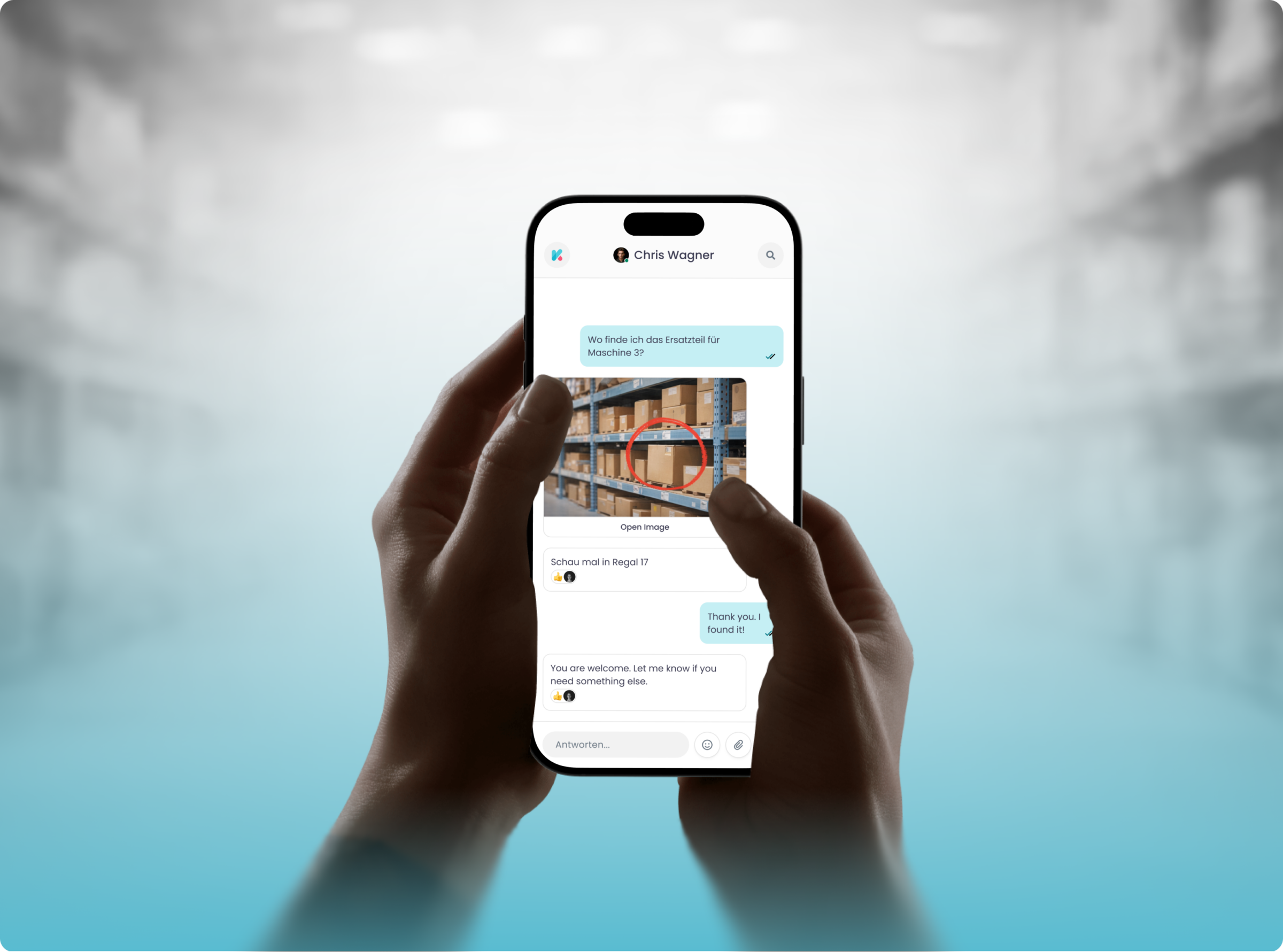
What does an e-learning system consist of?
An e-learning system usually consists of three main components:
- A learning platform that enables hosting, management, and access to learning materials and learning resources.
- Learning content that is created and provided by instructors or by the learning platform provider.
- Tools and functions that enable interaction and communication between learners, instructors, and other members of the course.
There are many different e-learning systems and platforms that offer different functions and tools to support learners in the best possible way and to optimize their learning process.
Do you want to try out an e-learning platform live and in color? Arrange a demo with us!
Table of Contents
Ready for training that works?
Get to know keelearning in a personal demo – no obligation and tailored to your needs.
Share
Lorem ipsum dolor sit amet, consectetur adipiscing elit. Suspendisse varius enim in eros elementum tristique. Duis cursus, mi quis viverra ornare, eros dolor interdum nulla, ut commodo diam libero vitae erat. Aenean faucibus nibh et justo cursus id rutrum lorem imperdiet. Nunc ut sem vitae risus tristique posuere.




The learning platform for businesses looking to make their training simple, mobile, and accessible to all – with no IT overhead.