All blog posts
Published on
23.10.2026
LMS examples: 12 learning management systems and how they're used

Lisa Kubatzki
Senior Content Marketing Manager @ keelearning
description
A learning management system (LMS) helps companies organize training centrally, provide learning content and document progress. However, the available learning platforms differ significantly in features, target groups and costs.
While some LMS were developed specifically for employees without a fixed PC, others focus on talent development, customer training or large international organizations.
Well-known LMS examples include Moodle, ILIAS, 360Learning, Docebo, reteach and keelearning. Which solution is right depends mainly on the use case.
In this article, we present 12 learning management systems by use case. Four practical examples also show how companies use digital learning platforms successfully.
TL;DR: 12 LMS examples for different business needs
{{key-takeaways}}
The right LMS for frontline teams
An LMS manages training and learning progress centrally
A learning management system is software that companies use to deliver, manage and evaluate digital training. This includes onboarding, mandatory instruction, product training and professional development programs, for example.
Typical LMS features are learning paths, participant management, knowledge checks, certificates and reporting.
Two related types of system should be distinguished:
- LXP (learning experience platform): focuses more on individual learning recommendations and self-directed learning.
- Authoring tool: mainly used to create digital learning content and interactive courses.
Modern platforms often combine several of these functions.
Types of LMS at a glance
Different learning management systems suit different use cases.
LMS category | Typical use | Examples |
Frontline LMS | Mobile employee training | |
Corporate LMS | Onboarding and compliance | |
Enterprise LMS | International talent development | |
Collaborative LMS | Shared knowledge transfer | |
LMS with authoring tool | Creating your own courses | |
Open-source LMS | Customized learning environments | |
Customer academy LMS | Training customers and partners |
The right LMS for frontline teams
No off-the-shelf LMS: how to choose, plan and launch your LMS project for operational teams.
- Requirements that really matter
- The right questions for providers
- Setting up the LMS project internally
12 LMS examples by use case
The following providers differ in features, costs and target group. That's why it's worth looking at the intended use first.
1. keelearning: mobile LMS for operational teams
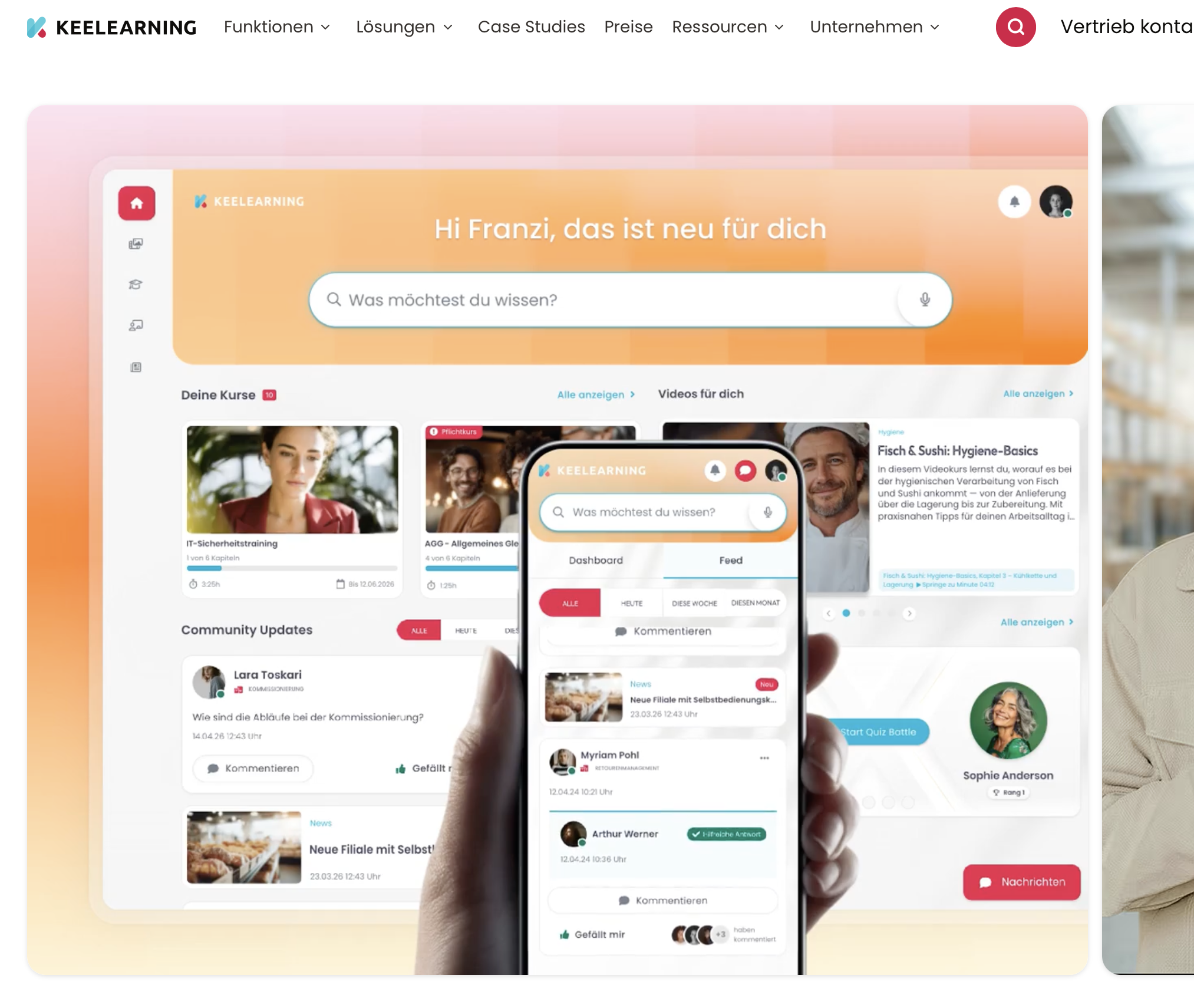
keelearning is a learning platform for companies with many employees who don't have a fixed office workstation.
The platform offers a mobile app for iOS and Android, automatic translations into more than 20 languages and more than 160 course templates. AI-supported course creation, mandatory training management and reporting are also available.
The Core package starts at €299 per month for up to 50 users with annual billing.
Suitable for: Companies with around 100 employees or more, distributed locations, shift work or international teams.
Experience keelearning live and book a demo
2. reteach: mandatory training and compliance
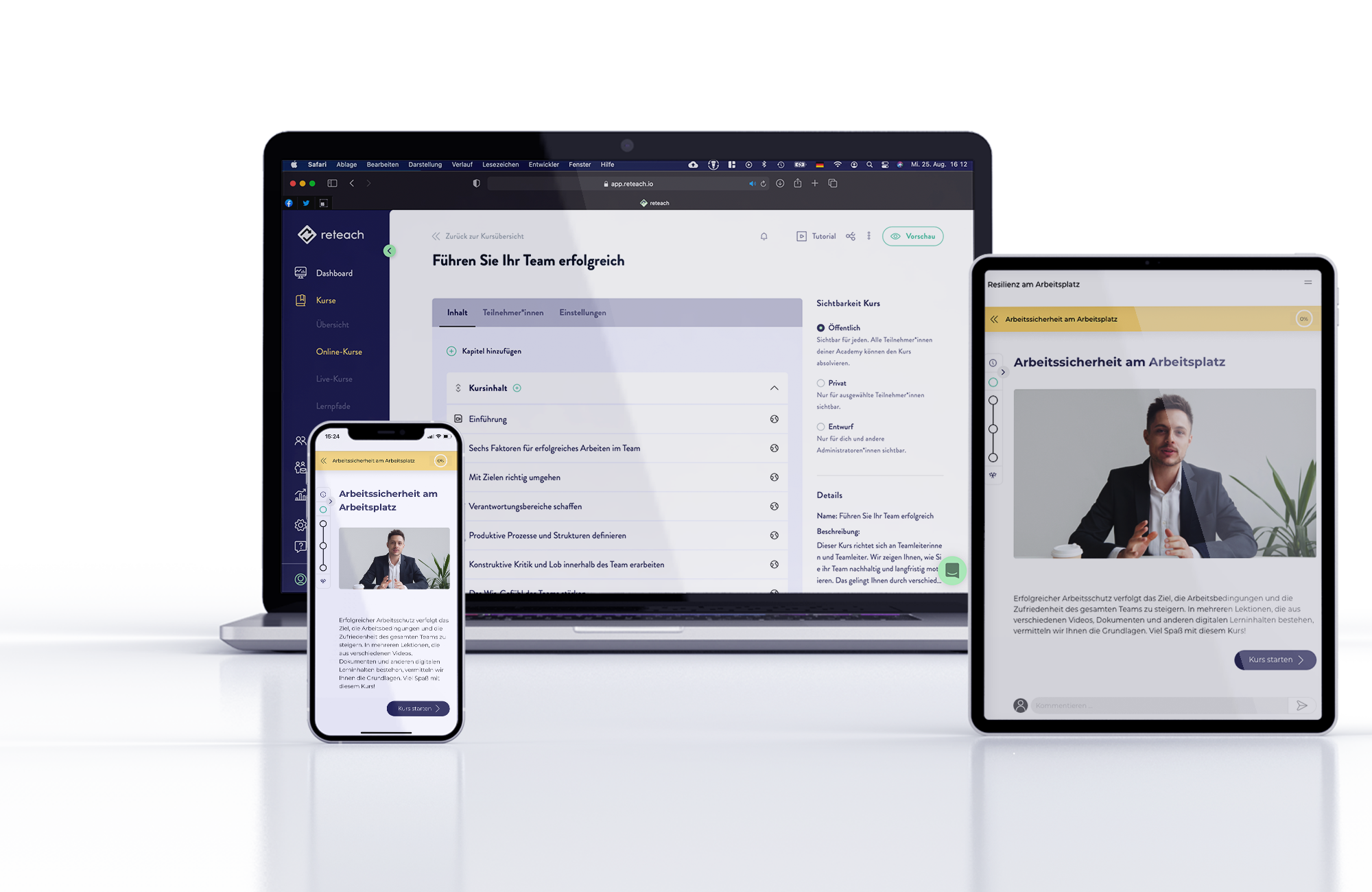
reteach is an LMS for medium-sized companies with a focus on onboarding, mandatory instruction and compliance.
Features include AI course creation, learning checks, certificates and automated training processes. Add-on modules such as course libraries and HR integrations can also be booked.
Prices start at €150 per month with annual payment.
Suitable for: Medium-sized companies with regular training needs and training that has to be documented.
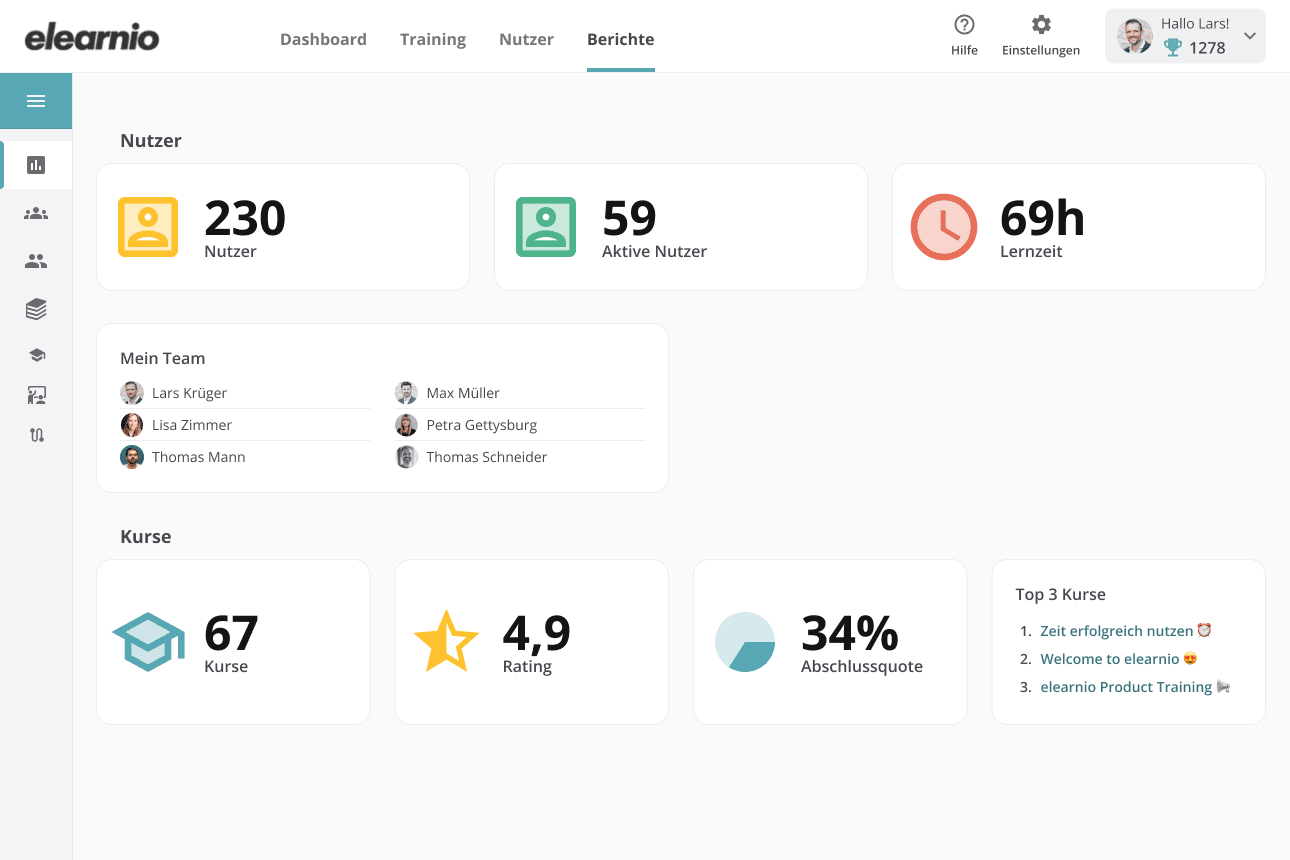
3. elearnio: onboarding and talent development
elearnio combines an LMS with an integrated authoring tool and AI-supported course creation.
The platform supports structured learning paths, interactive videos, mandatory training and numerous HR integrations. According to the provider, hosting is in Germany.
The entry price is €250 per month for up to 50 licenses.
Suitable for: SMEs focusing on digital onboarding and talent development.
4. Docebo: scalable learning for different target groups
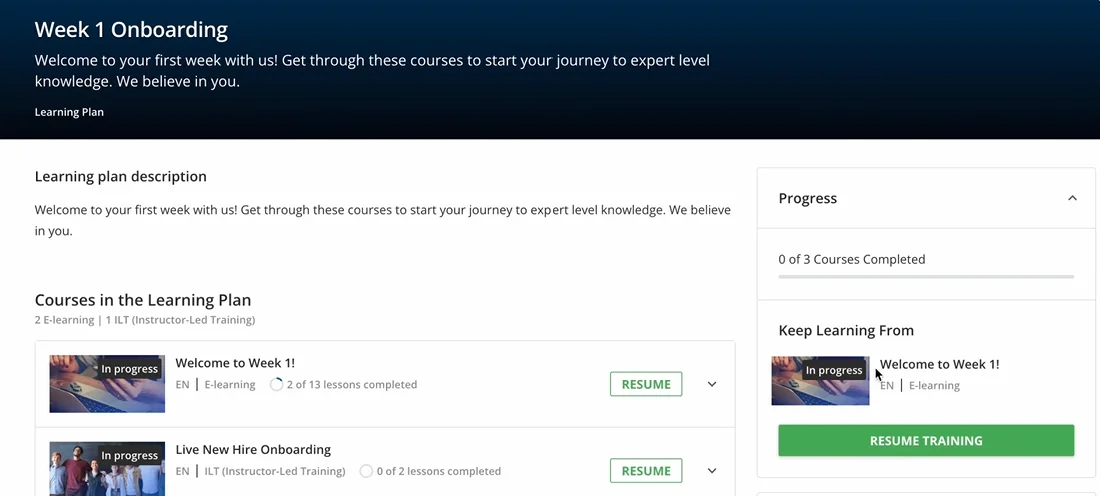
Docebo is an enterprise LMS for employee, customer and partner training.
The platform offers AI-supported learning features, personalized content, certifications and extensive integrations. Different target groups can also be managed centrally.
Prices are calculated individually.
Suitable for: Larger companies with international training needs and various learner groups.
5. Cornerstone: learning and skills development
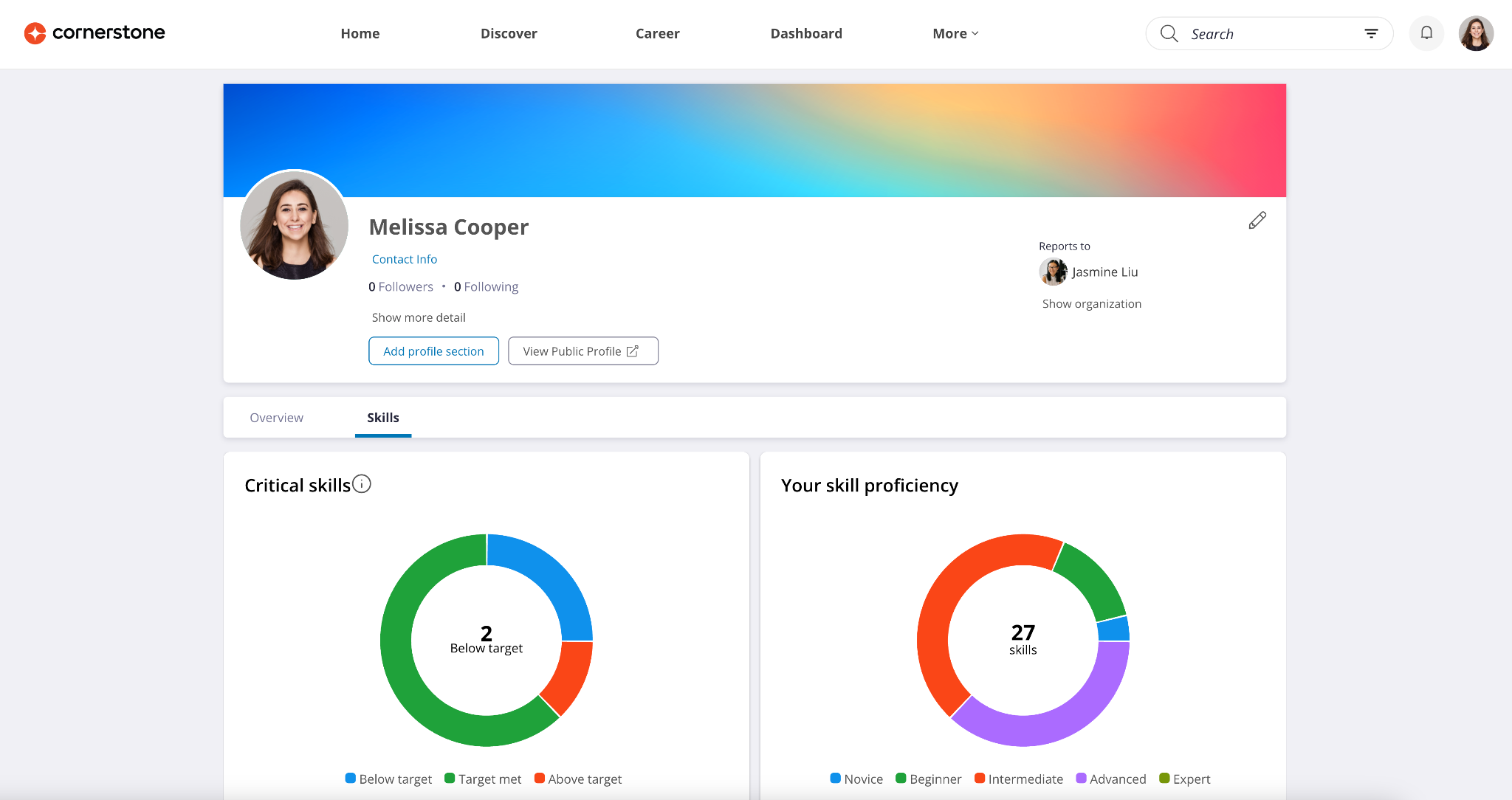
Cornerstone combines learning management with strategic talent development.
Features include personalized learning paths, compliance tracking, certifications and detailed analytics. The platform also supports skills-based professional development.
Prices are available on request.
Suitable for: International companies with complex professional development and compliance requirements.
6. SAP SuccessFactors Learning: LMS for existing HR landscapes
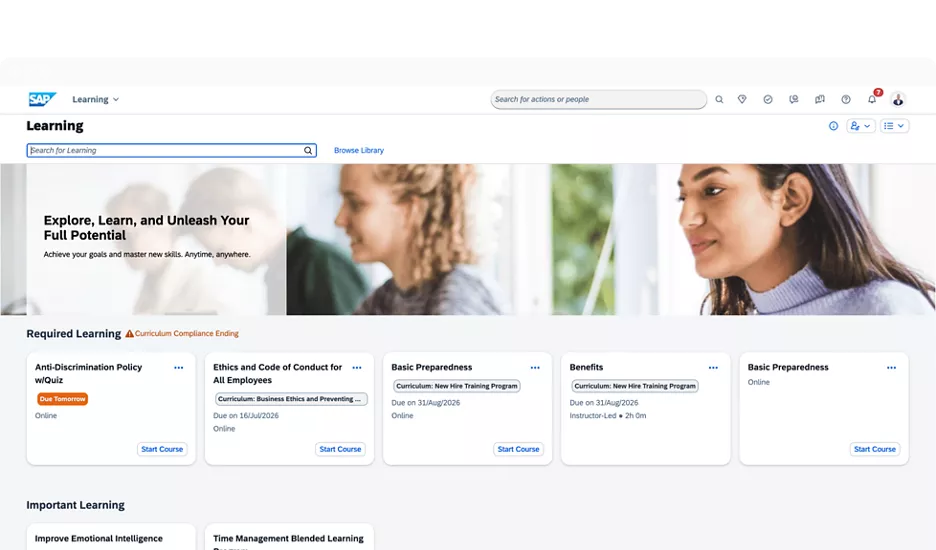
SAP SuccessFactors Learning is a cloud-based LMS for managing training and employee qualifications.
Particularly relevant are integration with SAP HR processes, automated mandatory training, learning recommendations and comprehensive reporting.
Prices are offered individually.
Suitable for: Large organizations that want to closely connect learning management with their HR software.
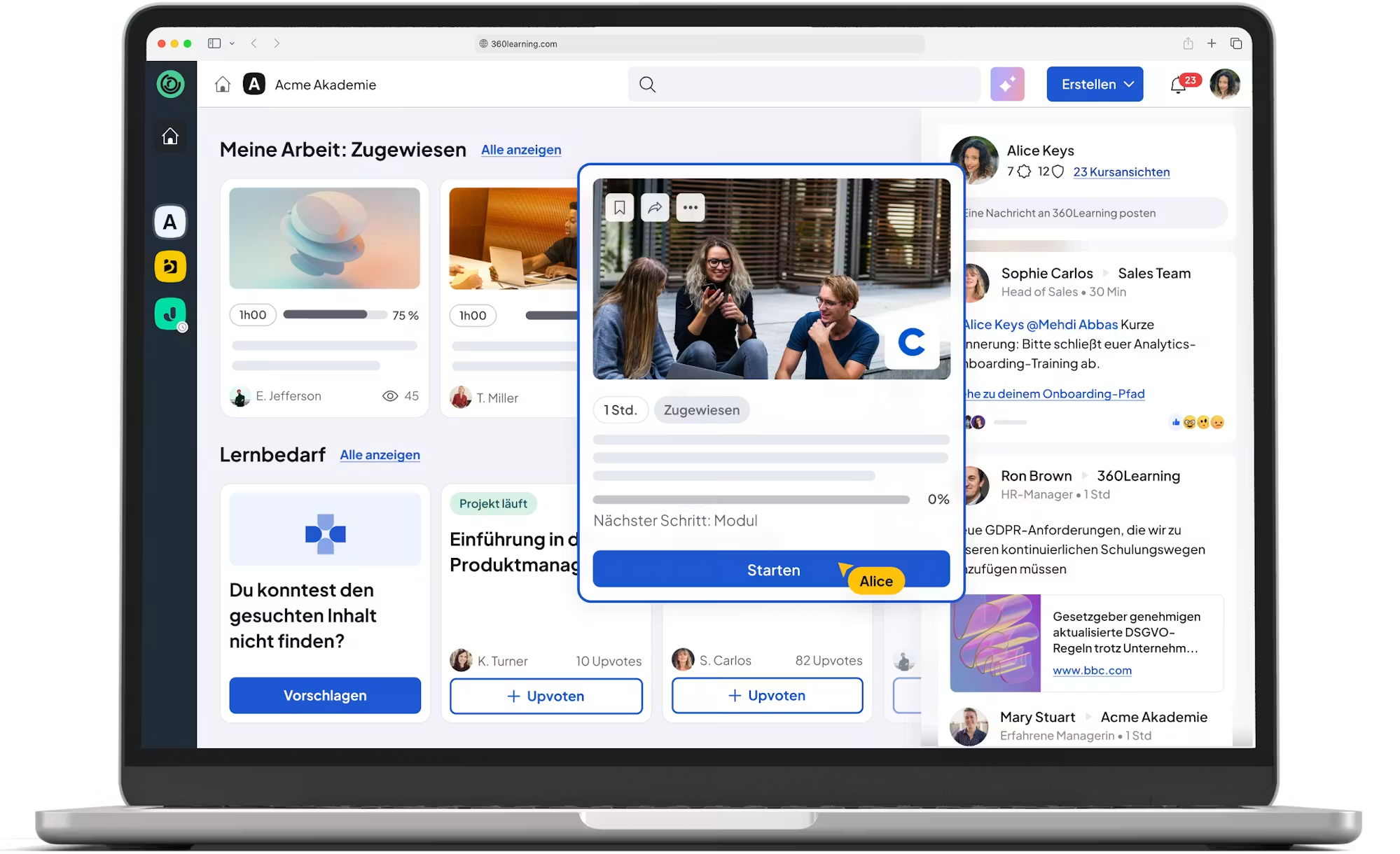
7. 360Learning: learning through collaboration
360Learning is a learning platform with a focus on collaborative learning.
Employees can create, comment on and improve courses together. The platform also offers AI course creation, learning recommendations and integrations.
The Team plan starts at €8 per user per month for up to 100 users.
Suitable for: Companies that want to prepare and share internal expert knowledge together.
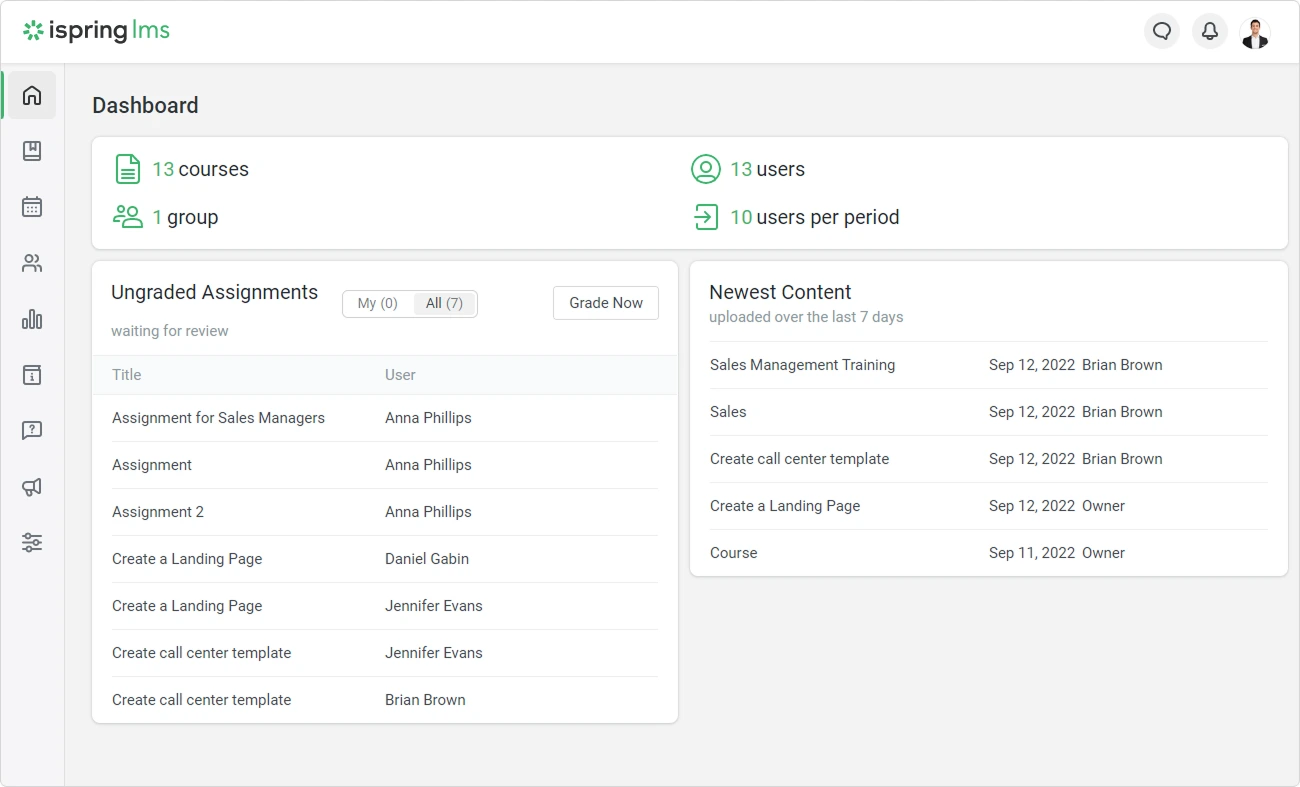
8. iSpring LMS: course creation and training management
iSpring LMS combines digital training management with extensive authoring tools.
Companies can create interactive courses, quiz questions, videos and simulations. The platform also supports mobile training with an offline mode.
Prices are based on active users.
Suitable for: Companies that regularly want to develop their own interactive learning content.
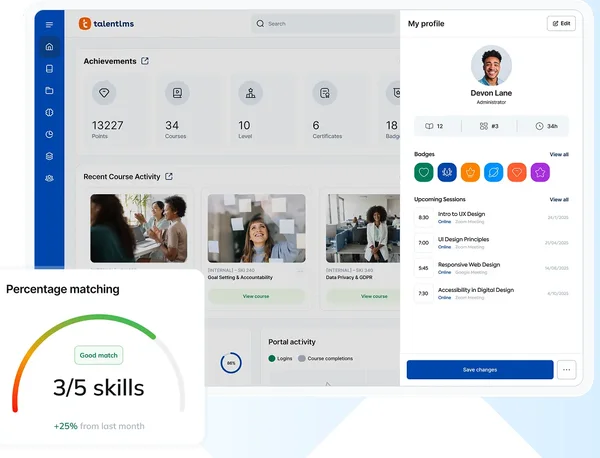
9. TalentLMS: an easy start with e-learning
TalentLMS is a cloud-based LMS for employee, customer and partner training.
The platform offers a course editor, AI features, learning paths and gamification. Companies can also set up different learning portals.
A free plan for up to five users makes it easy to get started.
Suitable for: Small and growing companies that want to introduce digital training quickly.
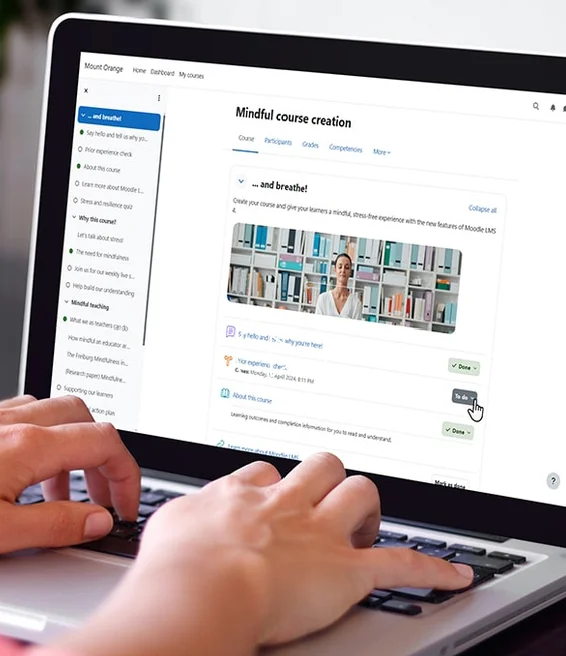
10. Moodle: flexible open-source LMS
Moodle is one of the most widely used open-source learning platforms.
The system supports courses, tests, forums, progress tracking and numerous extensions. Companies can host Moodle themselves or hire a service provider.
The software is free of license fees. However, there may be costs for hosting, maintenance and customization.
Suitable for: Organizations with their own IT resources and individual requirements.
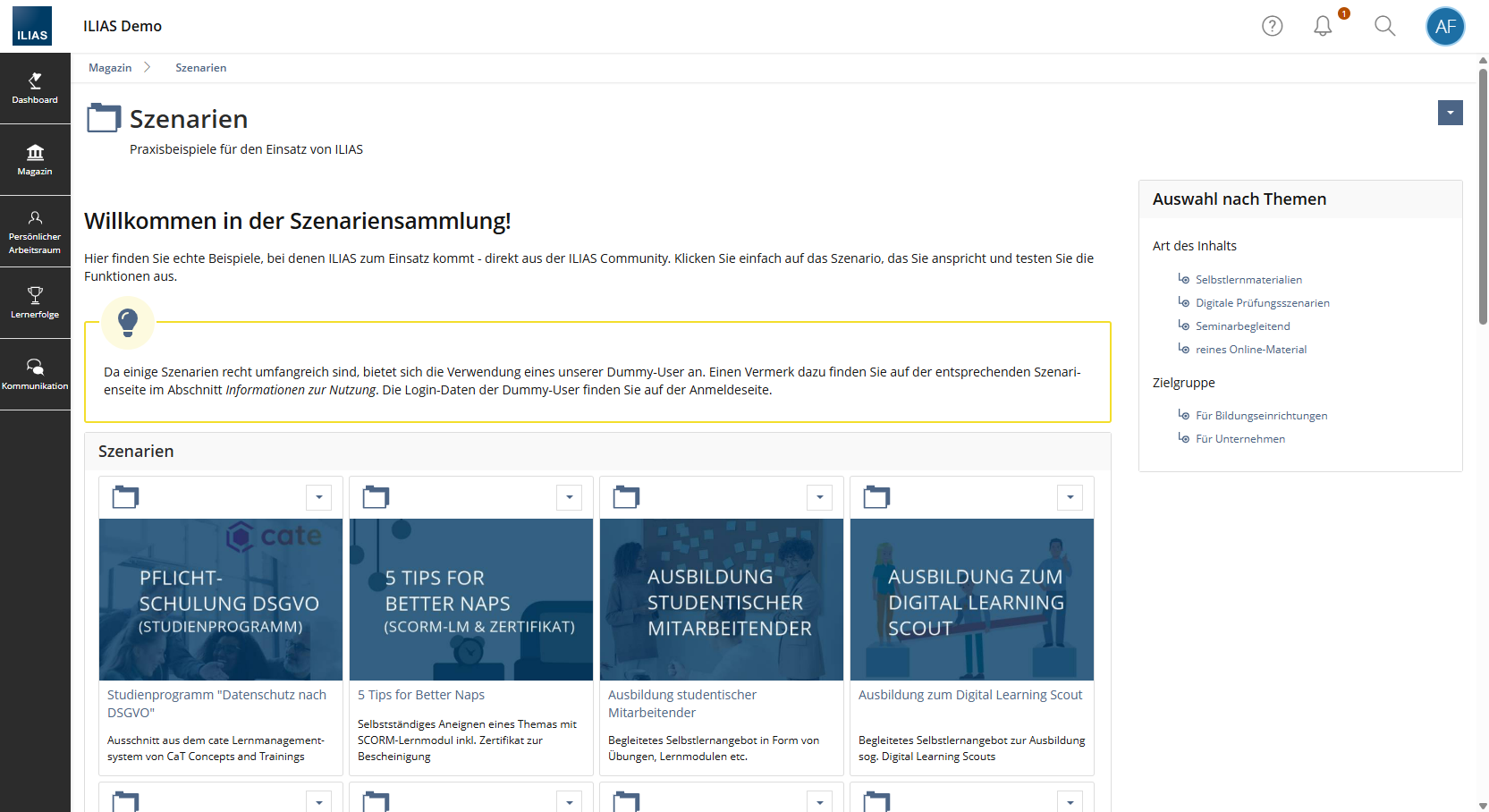
11. ILIAS: open source with extensive learning management
ILIAS is an open-source LMS with a focus on structured learning processes.
In addition to courses, it offers tests, exams, learning modules, wikis and a granular permission system. External learning content can also be integrated via standards such as SCORM.
The software is available free of charge. However, operation and support require effort.
Suitable for: Educational institutions, public organizations and companies with complex requirements.
12. LearnUpon: train customers and partners centrally
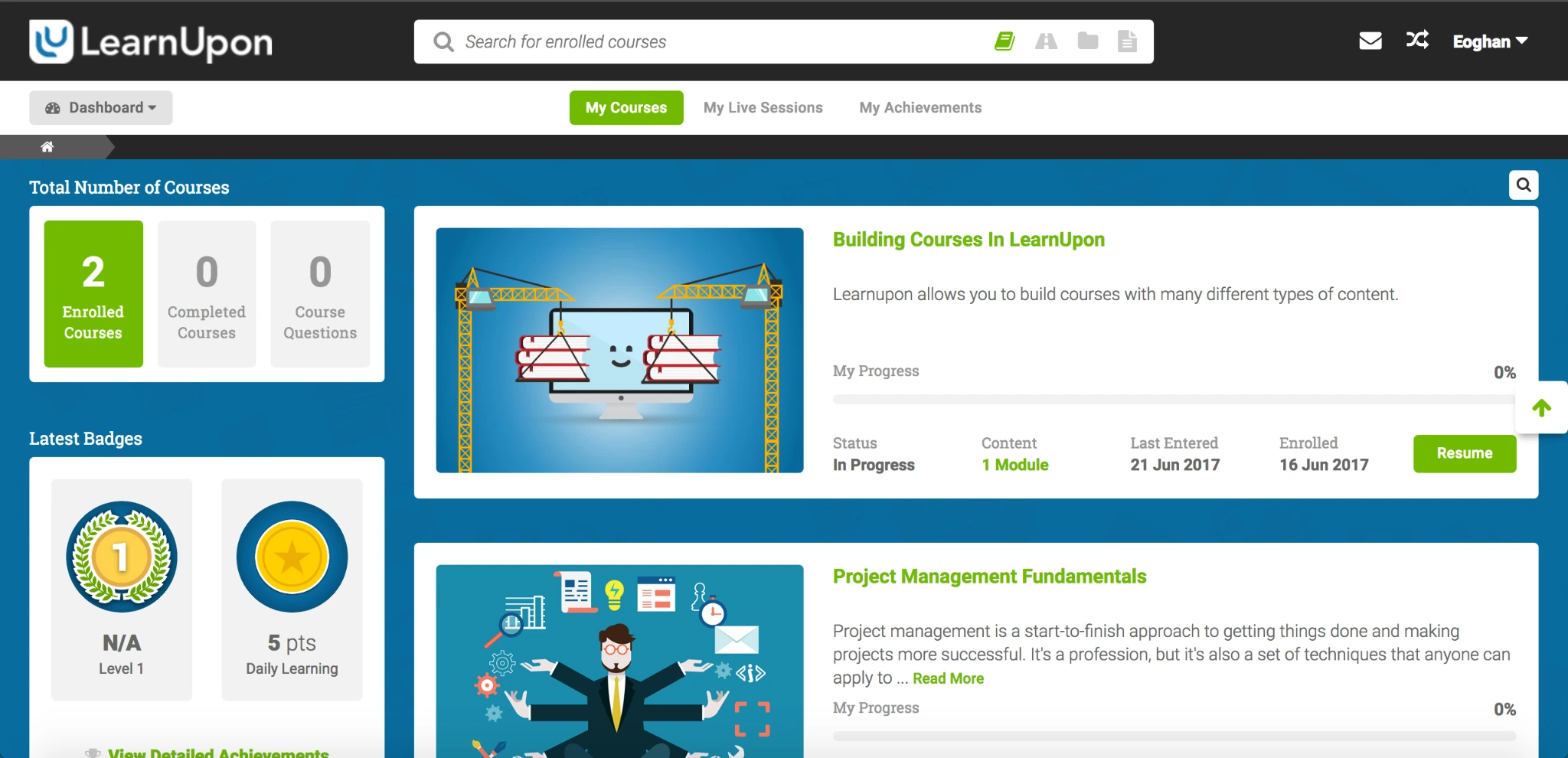
LearnUpon helps companies build digital customer and partner academies.
This includes separate learning portals, custom branding, certifications and automated learning paths. This way, different target groups can get their own training environments.
Prices are offered individually.
Suitable for: Companies that want to train external target groups systematically and support them in the long term.
How companies use an LMS: 4 practical examples
An LMS doesn't just offer features; it can improve concrete business processes. The following examples show different ways companies use keelearning.
1. MS Direct: multilingual onboarding in logistics
Swiss company MS Direct AG uses keelearning to onboard and train operational employees.
More than 600 frontline employees are trained on mobile and in multiple languages. New employees at eight locations also receive standardized onboarding content.
Thanks to automatic translation, employees can learn in their preferred language. At the same time, content can be updated centrally.
2. DATAflor: customer training boosts revenue
Software provider DATAflor uses keelearning for customer training, onboarding and compliance.
Digital learning modules make it easier to teach software skills flexibly. According to the case study, DATAflor generated more than 200% additional revenue from customer training in the following quarter.
The company also achieved a 100% completion rate for its mandatory courses.
3. Terminal for Kids: mandatory training for almost 40 daycare centers
Terminal for Kids gGmbH organizes training for almost 40 facilities via one central platform.
More than 100 courses have been created. This means new employees can learn independently of fixed training dates.
According to the case study, the provider saves around 130 hours per year per mandatory course. Central reporting also makes quality management easier.
4. Wüstenrot: gamification for field sales
Wüstenrot Bausparkasse uses a quiz app to train around 1,400 field sales employees.
Interactive quiz battles teach product knowledge and boost motivation to learn. Employees can also learn whenever it suits them.
According to the case study, more than 98% of registered employees actively use the app.
Discover more practical examples and get to know keelearning
Five selection criteria for finding the right LMS
Twelve LMS examples become a useful shortlist once companies define their requirements first.
- Target group: are office employees, frontline teams or external customers learning?
- Features: do you need onboarding, mandatory training, your own courses or certificates?
- Usability: can the LMS be used on mobile and without extensive training?
- Data protection: where is data processed and which security standards apply?
- Costs: how high are license fees, implementation, hosting and ongoing admin effort?
For international teams in particular, multilingual support and reachability without a company email address also play an important role.
For a more detailed comparison, we recommend our comparison of e-learning platforms.
With the free LMS selection checklist for frontline teams (in German), you can also check your requirements systematically.
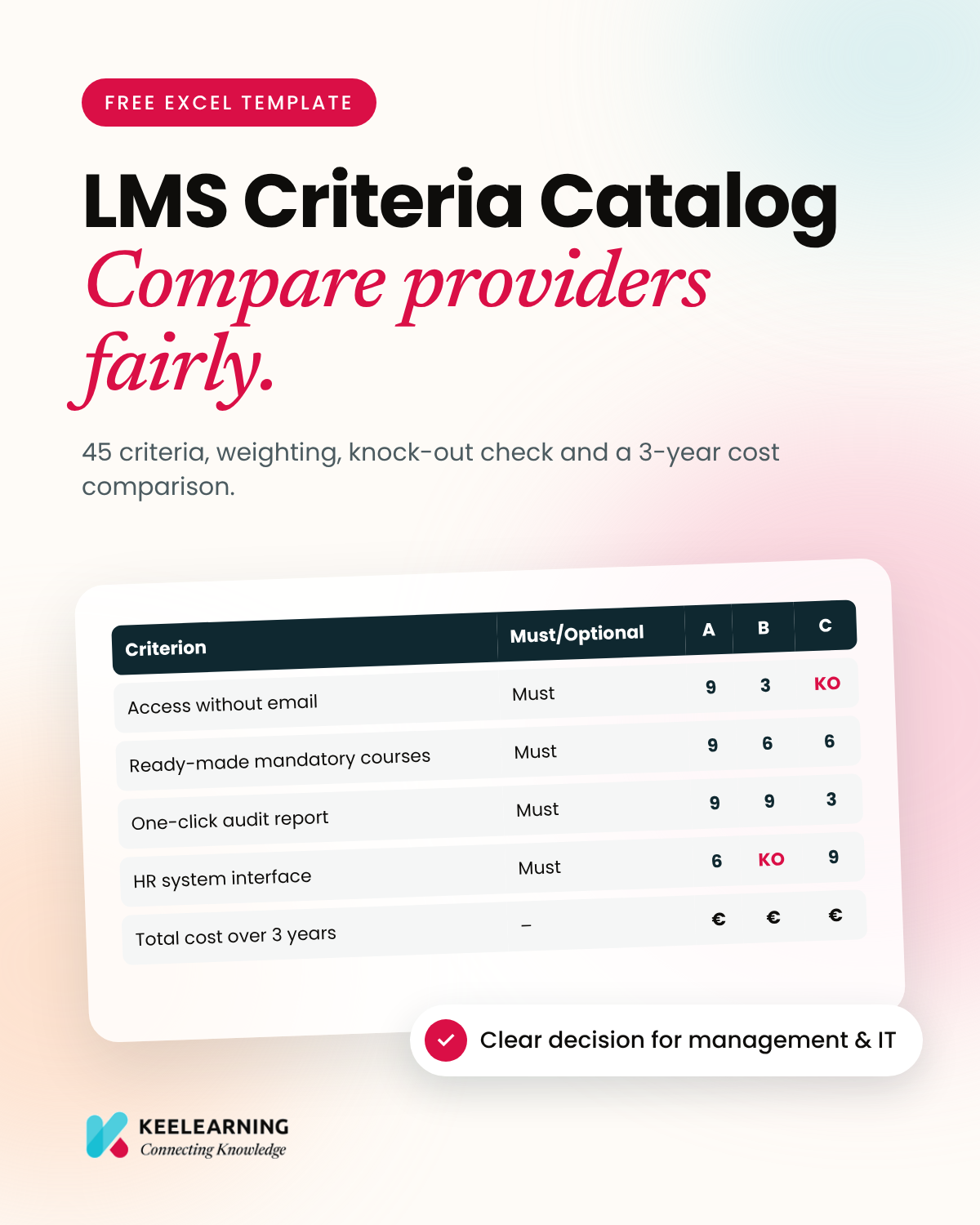
LMS criteria catalog ready to fill in
From LMS example to the right learning platform
The twelve examples show that there is no universally suitable learning management system.
While Moodle and ILIAS offer individual design options, enterprise systems are particularly suited to complex organizational structures. Other platforms focus on course creation, collaboration or customer training.
keelearning, on the other hand, is aimed particularly at companies with many operational employees who want to organize training on mobile, in multiple languages and across locations.
So what matters is not the number of features, but how reliably your employees can access the learning content they need.
{{inline-cta}}

Data protection & AI in e-learning
Avoid legal pitfalls: created with the law firm VARY.FY.
- Who may see which data?
- Works council & co-determination
- GDPR in practice
- NEW: what the EU AI Act means
FAQ: Common questions about LMS examples
What is an example of an LMS?
Well-known LMS examples are Moodle, ILIAS, 360Learning, Docebo and keelearning. They let you centrally manage digital training and learning progress.
Is Moodle an LMS?
Yes, Moodle is an open-source LMS. The software offers course management, tests and learning activities and can be self-hosted.
What is the difference between an LMS and an LXP?
An LMS focuses on organizing and documenting training. An LXP puts more emphasis on personalized learning recommendations and self-directed learning.
Are there free learning management systems?
Yes, Moodle and ILIAS are free of license fees. However, hosting, maintenance and customization can incur costs.
Which LMS is suitable for small companies?
TalentLMS and elearnio can be interesting for smaller teams. For larger companies with mobile frontline teams, keelearning offers the relevant features.
Disclaimer: This comparison is based on publicly available information as of October 2026. We strive to keep all information up to date. As providers may change their features and prices, we recommend checking current terms directly on the official websites.
Key Takeaways
- Mobile employee training: keelearning is suited to distributed frontline teams, companies that run customer training, and multilingual learning.
- Corporate learning for mid-sized companies: reteach and elearnio support onboarding, mandatory training and talent development.
- Enterprise learning: Docebo, Cornerstone and SAP SuccessFactors Learning are aimed at larger organizations.
- Collaborative learning: 360Learning enables joint course creation and knowledge sharing.
- Easy course creation: iSpring LMS and TalentLMS combine learning management with authoring tools.
- Open source: Moodle and ILIAS offer customizable learning environments.
- Customer academies: LearnUpon supports training for external target groups.
- LMS examples at a glance: the 12 learning management systems presented differ in features, target groups and use cases. Practical examples show how companies use learning platforms for onboarding, mandatory training, employee training and customer academies, and what matters when choosing one.
Table of Contents
Ready for training that works?
Get to know keelearning in a personal demo – no obligation and tailored to your needs.
Share





The learning platform for businesses looking to make their training simple, mobile, and accessible to all – with no IT overhead.